Strengthening Agricultural Research and Partnerships through ACE Impact Project

Strengthening Agricultural Research and Partnerships through ACE Impact Project

Agriculture and its importance to Africa 

 Considered to be the backbone of economic systems of developing countries, agriculture is the mainstay of several African economies, underpinning their food security, export earnings, rural development, and economic stability.  Given the enormous importance of Agriculture to Africa’s economic development, the ACE Impact project prioritizes agriculture and has it as one of the five broad thematic areas being supported by the project.  

According to a report by the World Food and Agriculture Organization (FAO) 2020, agriculture’s contribution to GDP in Africa is at an average of 35%. Additionally, Africa achieved the highest rate of growth in agricultural production value (crops and livestock), the highest in the world, expanding by 4.3% per year between 2000 and 2018. This figure is roughly double that of the prior three decades (AGRA, 2020). Again, across Sub-Saharan Africa, the agricultural sector employs a proportion of the labor force and supplies the bulk of basic food, as well as provides subsistence and other income to a fraction of the population. It is noted that significant progress in promoting economic growth, reducing poverty, and enhancing food security cannot be achieved in most developing countries without enhancing the potential human and productive capacity of the agricultural sector and enhancing its contribution to overall economic and social development. A strong and vibrant food and agricultural system thus forms a primary pillar in the strategy of overall economic growth and development.    

Extensive research continues to be conducted, examining ways of enhancing the agricultural sector as a means of improving its socio-economic benefits. In line with this, current trends in agricultural research have focused on plant breeding, food security and technology, agribusiness, genetically modified organisms (GMOs), animal science, among others.  

The African Union’s New Partnership for Africa’s Development (NEPAD) posits that the Agric sector offers the greatest potential for poverty and inequality reduction, as it provides sources of productivity from which the most disadvantaged people working in the sector should benefit. As a result, national and private investments are being directed toward the development of agriculture within the region.   


ACE Impact Contributions to Agriculture 

 The project has seven Agric-oriented centers in six countries (Cote d’Ivoire, Ghana, Niger, Nigeria, Senegal and Togo) focusing on areas including Food Security and Nutrition, Livestock and Poultry Science, Food Technology and Research, Dryland Agriculture, Crop Improvement, Climate Change/ Biodiversity, and Agricultural Entrepreneurship and Innovation. Click here to see ACE Impact agriculture centres:  

Food Technology and Research(CEFTER); Regional Center of Excellence on Poultry Sciences (CERSA); African Center of Excellence in Agriculture for Food and Nutrition Security (CEA-AGRISAN) based at Cheikh Anta Diop University; West African Crop Improvement Center of Excellence (WACCI), Legon University, Ghana; – The Centre of Excellence Centre for Dryland Agriculture (CDA) at the University of Bayero, Kano, Nigeria; African Centre of Excellence on Climate Change, Biodiversity and Sustainable Agriculture (CEA- CCBAD) of the University Félix Houphouët Boigny; ACE: Pastoral Productions: Meat, Milk, Leather and Skins, Université Abdou Moumouni. 


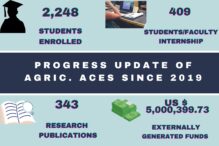
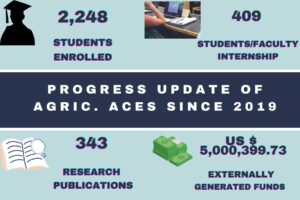
Overall, the ACE Impact Agric focused centres have been undertaking impactful research (leading to the publication of 343 Research findings in high impact journals, and still counting), collaborating with international, regional and national institutions to innovate and to strengthen Agriculture’s contribution to their national and regional economies, among others.  Below are some key achievements of the Agric ACEs:
Food for West Africa Network 

In line with strengthening Inter-ACE collaborations, various thematic networks have been created under the ACE Impact Project. The Food for West Africa (FOOD4WA) is one of eight thematic networks established with the aim of advancing collaboration on cutting-edge research, to address food insecurity challenges within the region. The network’s objectives are:  

  1. To establish a network between faculty and students from the participating ACEs 
  2. Create a coordination of research on priority themes related to food security 
  3. Communicate the results of research and innovation through conferences and symposia involving key actors in the agricultural sector 
  4. Create a digital platform  

The network is expected to involve agriculture stakeholders within the region to strengthen food security, improve quality in agricultural products, train to increase the number of skilled agricultural workers and researchers and to develop innovative agricultural techniques to improve agricultural yields. 
CERSA Alumni Association officially launched

CERSA Alumni Association officially launched

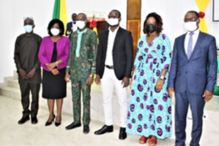
The alumni association of the Regional Centre of Excellence on Avian Sciences (CERSA) of the University of Lomé was officially launched on 19 August. 

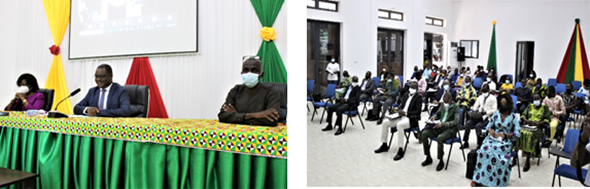
 The CERSA Alumni  Association,  which brings together former students who have obtained their Master’s and/or Doctorate at the Regional Centre of Excellence on Avian Sciences (CERSA) of the University of Lomé,  was officially launched on 19th August 2021. The ceremony took place virtually, with selected members physically attending the ceremony whilst adhering to all COVID-19 regulations and guidelines.

Professor Kafui KPEGA, Vice President of the University of Lome addressing the audience

Professor Kafui KPEGA, Vice President of the University of Lome addressing the audience

In his welcome address, the Centre Director, Prof. Kokou Tona stated that “CERSA graduates  are dedicated to improving the poultry sector and ready to address its challenges.” Prof. Tona reassured the audience that  “CERSA is determined to provide innovative ways of conducting research as well as training focused on solving the problems facing the poultry sector”.

Addressing the former students, Professor Kafui KPEGA, 2nd Vice-President representing the President of the University of Lomé entreated the graduates to be exemplary ambassadors of the center. He said, “You will not only have to represent your center with dignity as its ambassadors in your different countries but also you will have to reflect wherever necessary the requirements of rigor, discipline and skills, credo of our institution. Your actions on the ground should confirm the growing good reputation of the University of Lomé in general and CERSA in particular among academic actors in Africa and elsewhere.”

In his remarks, the President of Alumni CERSA, Mr. Bamela Mawoulom TOKOFAÏ noted that, the Association aims to provide a network of poultry science professionals committed to enhancing the African poultry sector with innovative initiatives. He said, “the  vision that drives us is that of a professional network of international reference at the service of quality poultry professional training, open to all and working for the professional integration of graduates, and for sustainable development and the development of all. He further noted that, “the general objective of the network is to facilitate the professional integration and mobility of graduates by putting them in contact with each other in a continuous and mutually enriching way, with partner companies, and to allow them to support and learn about the evolution and innovations of the poultry sector”.

Alumni CERSA has numerous members from 11 countries in East, West and Central Africa including Benin, Burkina Faso, Burundi, Cameroon, Chad, Côte d’Ivoire, Gambia, Ghana, Mali, Senegal and Togo.

The Association’s Strategic Plan comprises the official registration of the network, the coordination of activities in all countries where members reside, support to members’  professional progression, the establishment of framework for writing poultry projects and the organization of scientific and/or commercial conferences and symposia.

Also, Secretary General, representing the Minister of Higher Education and Research Prof.  Koffi AGBENOTO, urged the members of the association to embark on poultry entrepreneurship, and to initiate innovative projects to become their own employers, and create jobs for other young people.

Authorities present at the ceremony, called on the CERSA graduates  to assume a major role in promoting the poultry sector on the continent in a context where imports of  poultry products are still heavy in the trade balance of African countries.

CERSA Shares it Activities and Vision with the Group of Francophone Ambassadors based in Togo

CERSA Shares it Activities and Vision with the Group of Francophone Ambassadors based in Togo

The Regional Centre of Excellence for Poultry Sciences (CERSA) hosted by the University of Lomé was introduced to the Group of Francophone Ambassadors based in Togo  (GAF Togo)  and the Regional Representation of La Francophonie.

The centre’s activities were presented to these diplomats accredited to Togo. The GFA Togo includes the Ambassadors of Burkina Faso, the Central African Republic, Egypt, France, Gabon, Niger, the DRC and Senegal as well as the Regional Representation of La Francophonie.

According to the Ambassador of Gabon, President of the GFA Togo, Mr. Sayid Abdeloko, this approach allows diplomatic missions to have information on ways and means to promote the poultry sector in their respective countries, with the support of CERSA. “Today, the consumption and supply of poultry products to the population is low and forces our countries to import them from Europe and America. CERSA is an African tool that will support us in the transfer of knowledge and training in poultry. We must look closely at what kind of partnership our countries have, including the ministries of agriculture” said ambassador Sayid Abeloko of Gabon.


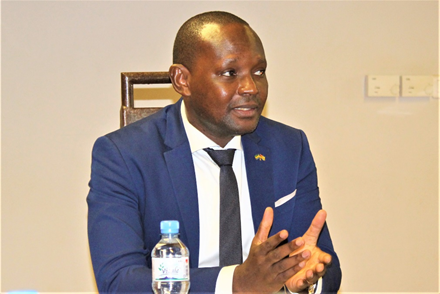
H.C. Mr. Sayid Abeloko, Ambassador of Gabon to Togo

Prof. Kokou TONA, Director of CERSA noted that ” We plan to establish agreements and other partnership agreements that will allow us to train Master’s and Doctoral level graduates and professionals to promote the development of the poultry sector in the different countries.”

The Regional Centre for Poultry Sciences (CERSA) aims to train graduates in poultry sciences and professionals in the poultry sector. About 150 Master’s graduates and about 50 PhD students and more than 1200 poultry technicians have been trained by CERSA so far. These poultry science graduates and technicians come from nearly fifteen countries in West and Central Africa.

CDA Collaborates with Partners to Address Food Insecurity

CDA Collaborates with Partners to Address Food Insecurity

The Centre for Dryland Agriculture (CDA) has collaborated with its partners to address the challenges of food insecurity affecting Nigeria and other African countries. UK based LINKS Program and Silvex International have expressed their unwavering commitment to strengthening their partnership with the CDA by coming up with workable strategies to address the food shortages, which have been exacerbated by climate change.

Commemoration of World Food Day by CDA:   The Centre commemorated the 2021 World Food Day with a Symposium titled: Food Security in the Face of a Changing Climate: Northern Nigeria in Perspective. World Food Day is celebrated every year on October 16 to commemorate the date of the founding of the United Nations Food and Agriculture Organization in 1945. The day is also observed by organizations like World Food Programme and International Fund for Agricultural Development. Since 1981, World Food Day has been celebrated under various themes to highlight the importance of food security, with most of them revolving around agriculture.

The Director of CDA, Professor Jibrin Mohammed Jibrin, in his remarks, said the centre joined the rest of the world to commemorate the day by organizing a symposium to discuss topical issues related to food security in Nigeria. He said the symposium would create awareness of the challenges being faced especially on food security and climate change.  CDA invited key stakeholders to brainstorm and come up with solutions that would be beneficial to policymakers and private sector actors to address these challenges.

In his presentation titled: 2021 Growing Season: Forecast, Reality and the Role of NIMET, the Director General of Nigeria Meteorological Agency (NIMET), Professor Mansur Bako, said the seasonal climate prediction being produced by NIMET is in fulfillment of one of its core mandates. He stated that NIMET monitors weather and climate in Nigeria and provides authoritative meteorological information for sustainable development and safety of life and property.

Professor. Bako, who spoke virtually stated that the wide range of applications of NIMET’s products and services made weather and climate information a relevant input in agriculture and almost all the sustainable development goals, including education.

He said that most states in Nigeria experienced below normal rainfall this year, as had already been predicted by NIMET and communicated to the farmers for them to take appropriate measures.

Presenting an Overview of LINKS/FCDO Climate Smart Agriculture Projects, the Team Lead of the Links Project, Andrew Thorburn said the project aims to transform strategic value chains to improve resilience and reduce climate impact through systems of rice intensification, regenerative agriculture platforms, and sustainable fibre alternatives for cotton.

Speaking on behalf of Silvex International, the Managing Director, Abubakar Usman Adam, mentioned that the company is investing in farm estates for a newly launched program in Jigawa and Nasarawa states which is aimed at bridging the gap in food production efficiency amidst climate change challenges.

CDA Develops Seven (7) New Early Growth Groundnut Seeds for African Farmers

CDA Develops Seven (7) New Early Growth Groundnut Seeds for African Farmers

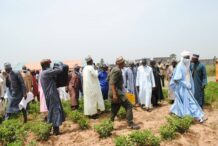
The Centre for Dryland Agriculture (CDA) of Bayero University (BUK) in Kano (Nigeria) has developed seven early growth groundnut seeds for farmers. The centre also unveiled improved seed varieties of sorghum, beans and millet at the centre’s Farmers’ Field Day held on Wednesday, 6th October, 2021.

The Field Day was aimed at showcasing the newly improved seedlings developed by the centre to farmers and extension workers in Nigeria and sub-Saharan Africa.

Several factors have been identified as the reason for the decline in groundnut production in Nigeria such as drought, rosette virus, general neglect of agriculture due to oil boom, and lack of organized input. However, the CDA in collaboration with International Crops Research Institute for Semi-Arid Tropics (ICRISAT), Zaria, and Institute of Agricultural Research (IAR), sponsored by Bill and Melinda Gates Foundation took the challenge to revive the production of groundnut by providing new improved seeds to farmers for sustainable production under the AVISA Project.

According to the Director of CDA, Professor Jibrin Muhammad Jibrin, the new seed varieties are drought resistant and if properly used, will help Nigeria, and by extension, Africa, to achieve food sufficiency.

“The seeds are pests and diseases resistant, grow early and lead to bumper harvests. If these seed varieties are used, farmers have the potential of yielding bigger harvests from the same lands they are using the traditional seed varieties. The groundnut we developed for instance has the dual purpose of more crop yield and bigger leaves that could be used as animal feed,” Professor Jibrin added.

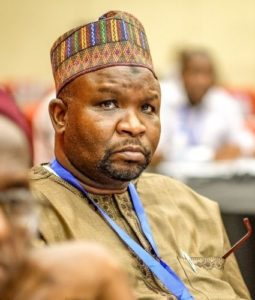
Professor Jibrin Muhammad Jibrin image
Professor Jibrin Muhammad Jibrin

The centre director, Prof. Jibrin M. Jibrin stated that “the centre has already adopted about 22 communities from the university’s neighborhood as models for testing the new seeds.” The Principal Investigator of the Project, Professor Sanusi Gaya Mohammed, in his remarks, said that through their research process, they screen the seeds and come up with those that will be given to seed companies to multiply their production for farmers use.

Professor Mohammed, the Deputy Director of Training at CDA, mentioned that apart from groundnut seeds, the CDA has been supporting the farmers with cowpea, beans, and millet seeds which have significantly improved their yields.

On her part, the Deputy Director, Outreach and Publications, Professor Amina Mustapha, said that the AVISA Project is one of many outreach programmes the centre runs, alongside collaborations with many partners in Nigeria and around the world.

Prof. Mustapha said that the CDA has been engaging its 22 adopted companies with modern agricultural farming methods, empowerment of improved seeds, as well as skills and training that improve their production and expand their awareness. She said the centre would continue to give emphasis to its outreach activities.

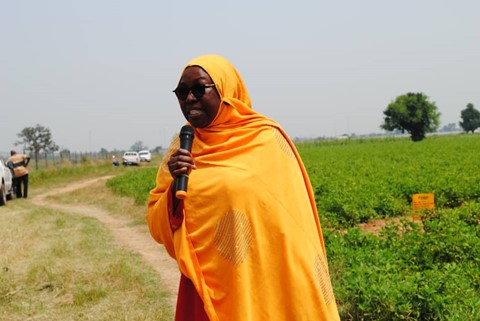
Professor Amina Mustapha

The Country Director of ICRISAT, Dr. Hakeem Ajeigbe urged the farmers to critically look at the seeds in order to give their feedback to the researchers. He said it would really benefit the research activities.

Also speaking, Professor  Yeye of Institute of Agricultural Research, Ahmadu Bello University, (ABU) Zaria, said the AVISA Project aims to improve the research activities through the use of various tools and application to enhance the process. It also aims to provide the seeds to farmers and educate them on the use and application in order to improve the yields.

Others who spoke were Professor Daniel Aba of IAR, Dr. Abou Togola, and Ado Garba from the Kano Agricultural and Rural Development Agency (KNARDA).

Farmers interviewed expressed appreciation to the CDA and its partners for helping with the improved seeds. They expressed optimism that they would adopt the new improved seeds so that the production of groundnut and other crops would be on higher scale in Nigeria.

WACCI spearheads the adoption of game-changing hybrid tomato varieties to ensure sustainable agriculture for the future

WACCI spearheads the adoption of game-changing hybrid tomato varieties to ensure sustainable agriculture for the future

Three hybrid tomato varieties (AVTO1866 (Ante Dede), AVTO1870 (Legon Tomato) and AVTO1871 (Tomato Queen)) developed by the World Vegetable Centre, a partner of the West Africa Centre for Crop Improvement (WACCI) are being considered for release in Ghana following multilocational trials and submission to the National Variety Release and Registration Committee (NVRRC), Ministry of Food and Agriculture by WACCI .
Professor Eric Yirenkyi Danquah, the Director of WACCI, in an address during a visit by the NVRRC to WACCI charged the Government of Ghana to invest in the agriculture commodity value chain to ensure that “game-changing” crop varieties such as these new tomato hybrids get to farmers across Ghana within the shortest possible time. “If you do not invest in the tomato value chain, these varieties will not go to the farmers in good time. That should not be the case”, Prof. Danquah said.
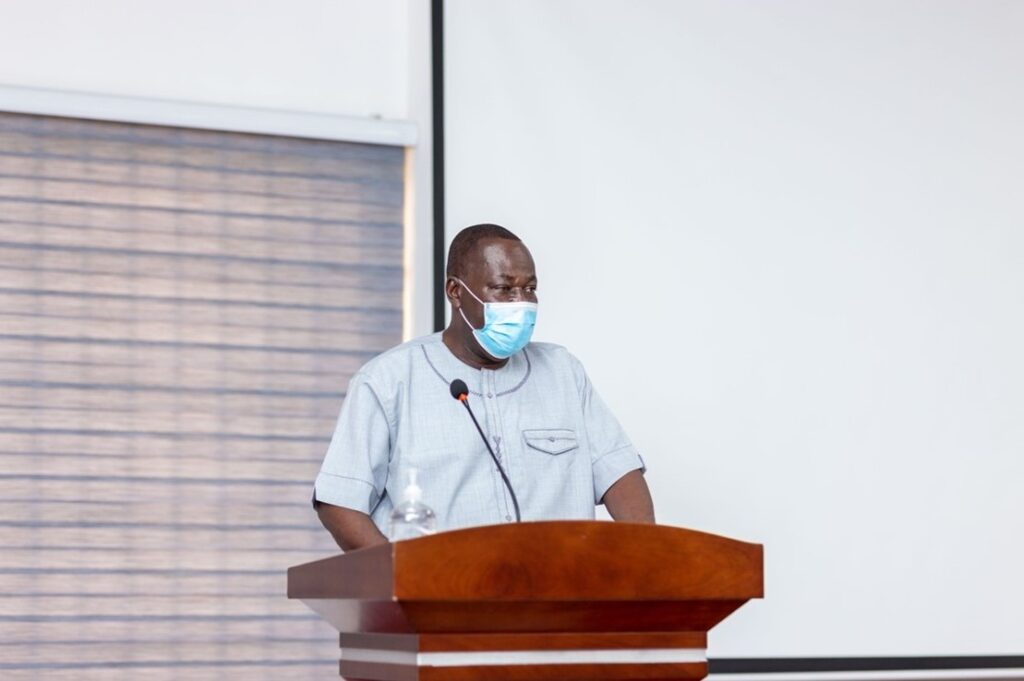
In his address, Mr. Seth Osei-Akoto, Chairman of the NVRRC highlighted how impressed he was with WACCI’s growth over the past years and praised the Centre for these new tomato hybrids but maintained that there still remained the challenge of getting farmers and consumers to accept hybrid tomato varieties. He charged scientists to develop strategies to understand the farmers needs and develop varieties that could meet those demands.

Mr Seth Osei-Akoto, Chairman of the NVRRC delivering his opening remarks

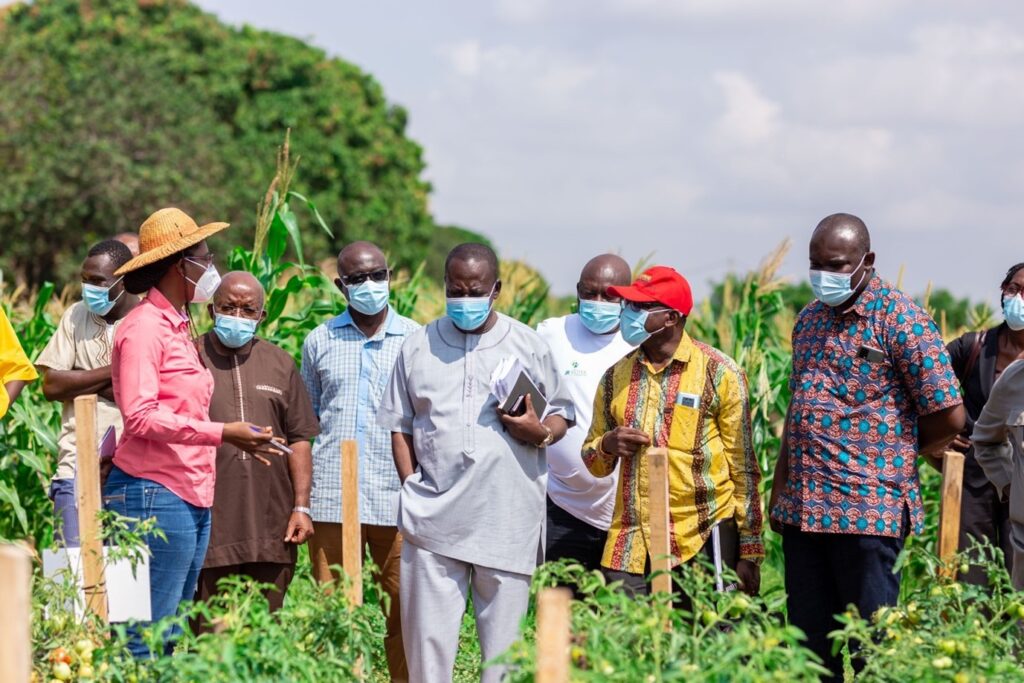
Dr. Leander Dede Melomey, a member of the WACCI hybrid tomato team led the NVRRC delegation to the field to inspect the hybrid tomatoes and later presented research findings from the multi-locational trials the team had conducted. Following rigorous scrutiny, Mr. Osei-Akoto announced that the three hybrid tomato varieties had been approved for recommendation for release and cultivation in the Coastal Savannah regions of Ghana.

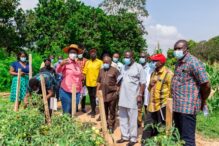
Dr. Melomey presenting the trial hybrid tomato field to members of the NVRRC

In response to the approval of the hybrid tomato varieties, Professor Danquah congratulated the team and charged the Government of Ghana to fast track the ending of food importation by supporting local institutions like WACCI.
The WACCI hybrid tomato team consists of the following: Dr. Agyemang Danquah [Coordinator, Research (Academic Programmes) WACCI], Dr. Leander Dede Melomey (Postdoctoral Fellow, WACCI) and Professor Eric Yirenkyi Danquah (Director, WACCI).

Some of the hybrid tomatoes ready for harvesting

WACCI Director Calls for ‘More Brains’ to Secure the Future of the Seed Industry

WACCI Director Calls for ‘More Brains’ to Secure the Future of the Seed Industry

Professor Eric Danquah, Director of the West Africa Centre for Crop Improvement (WACCI), University of Ghana has made a call for the training of a critical mass of plant breeders to secure the future of the seed industry in Africa. 

This call was made on Tuesday, June 29, 2021, during a visit by H.E. Hailemariam Desalegn, Board Chair of the Alliance for a Green Revolution in Africa (AGRA), to WACCI.   

Accompanying H.E. Desalegn, were Madam Agnes Asiimwe Konde, Vice President, Program Development & Innovation, and Mr. Forster Boateng, West Africa Regional Head among other team members.  The visit, was to among others, interact with representatives of the Ghana Early Generation Seed Consortium for Sustainable Production of Quality Seeds.  WACCI, is the lead of this consortium which was established to scale up the production of breeder and foundation seeds for maize, soybean, cowpea and groundnut. 

Addressing the delegation, Professor Danquah highlighted the benefits of training African plant breeders and seed scientists in Africa in the race against time to eradicate food insecurity by 2030.  


“WACCI has one of the highest outputs of PhD graduates in plant breeding education in the world over the past 14 years. It costs significantly less to train our students at home” he said.  “Our students have gone on to release improved varieties of staple crops and have raised funds for their research institutions. This is the value of quality plant breeding education in Africa for Africa. Therefore, we must strengthen and replicate the WACCI model across the continent if we want a food-secure Africa”, Prof. Danquah added.  

H.E. Hailemariam Desalegn, AGRA Board Chair 

For his part,  H.E. Desalegn commended WACCI for its achievements over the past 14 years in building the necessary human capacity, as well as conducting innovative and impact-driven research needed to drive food security and agricultural development in Africa.  

“WACCI is now much more important than ever because of the food challenges facing Africa”, he said.  

Madam Konde, in her remarks, also gave high praise to the Centre for its enviable accomplishments over the years in developing human resources and innovations to champion Africa’s green revolution. She called on WACCI, AGRA and other relevant stakeholders to continue to work hard in identifying and eliminating bottlenecks that prevented smallholder farmers from adopting innovations and technologies to fast-track efforts to transform agriculture on the continent.  


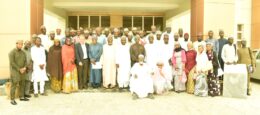
H.E. Desalegn and Prof Danquah with the WACCI team and AGRA officials 

COMMUNIQUÉ DE PRESSE- 6e Atelier Régional du CEA Impact

Pour publication immédiate


COMMUNIQUÉ DE PRESSE


Les Centres d’Excellence de l’Enseignement Supérieur en Afrique pour l’impact sur le développement (CEA Impact) se réunissent pour examiner le projet à mi-parcours et renforcer la mise en œuvre et l’efficacité du projet.

  6e Atelier Régional du CEA Impact se tiendra virtuellement du 8 au 11 novembre 2021.


Accra, Ghana (28 octobre 2021) – Le Sixième  Atelier Régional Biannuel des Centres d’Excellence de l’Enseignement Supérieur en Afrique pour l’impact sur le développement (CEA Impact) se tiendra du 8 au 11 novembre 2021. La réunion rassemblera les cinquante-trois (53) centres d’excellence, les représentants des gouvernements des pays participants, les vice-chanceliers, les représentants du secteur de l’enseignement supérieur, le secteur privé, les groupes de réflexion politique, et les partenaires tels que la Banque mondiale, l’Agence Française de Développement et l’Association des Universités Africaines ainsi que d’autres parties prenantes clés.

Depuis son lancement en 2019, le projet CEA Impact a enregistré des succès remarquables dans l’amélioration de la qualité de l’enseignement post-universitaire dans les institutions  d’enseignement supérieur de la sous-région, y compris Djibouti.  Le projet étant arrivé à miparcours, cet atelier présentera l’occasion unique de discuter des questions critiques qui ont émergé lors du processus d’examen à mi-parcours. L’atelier se concentrera sur l’échange de points de vue concernant les principales réalisations du projet et son statut général, ainsi que sur l’obtention d’un retour d’information précieux et de solutions pratiques pour l’avancement et le développement du projet au cours de la prochaine moitié de sa mise en œuvre.

Les centres auront l’opportunité de partager leurs expériences et de se mettre en réseau afin de favoriser les collaborations pour la durabilité du projet. Cette opportunité garantit la réalisation de l’objectif global du projet – améliorer la qualité, la quantité et l’impact sur le développement de l’enseignement supérieur en Afrique par la spécialisation et la collaboration régionales.


De manière générale, les principaux domaines d’intérêt de l’atelier seront les suivants :

  1. Mise à jour des progrès et domaines prioritaires clés.


  1. Examen à mi-parcours (EMP) – offre aux parties prenantes du projet l’occasion de revoir ensemble l’efficacité de la conception et de la mise en œuvre du projet et de résoudre les goulets d’étranglement opérationnels.
  • Faits saillants sur les activités liées au suivi et à l’évaluation – Vérification des indicateurs liés aux décaissements (ILD), mises à jour sur l’impact sur le développement, et l’entrepreneuriat et l’innovation.
  1. Mise à jour sur les initiatives de mise en réseau – Réseaux thématiques Inter-CEA; Partenariat pour les compétences en sciences appliquées, ingénierie et technologie (PASET); Initiative des Centres de Compétences en Éducation Numérique (C-CoDE) – une initiative visant à promouvoir l’intégration durable de l’éducation numérique dans les processus d’enseignement.
  2. Sessions parallèles sur le suivi et l’évaluation, la gestion financière et le décaissement, la passation de marchés et les sauvegardes.


Avant l’atelier, une réunion ministérielle à huis clos aura lieu le 8 novembre 2021. Les ministres de l’éducation des 10 pays participants, ainsi que les partenaires du projet, se réuniront pour fournir des conseils sur la mise en œuvre réussie et la durabilité du projet. La séance d’ouverture aura lieu le mardi 9 novembre 2021 à 10h00.

Le projet CEA Impact reste dédié au renforcement des capacités des 53 centres à dispenser une éducation de qualité et à produire les solutions aux besoins de développement du continent.

Toutes les parties prenantes du CEA Impact sont invitées à participer activement à cet atelier.


Pour plus d’informations sur le projet  CEA Impact, visitez le site https://ace.aau.org/.


–  FIN –


Note aux rédacteurs

Pour de plus amples informations, veuillez contacter Mme Millicent Afriyie Kyei à l’adresse électronique makyei@aau.org.


Informations générales :  

Le projet de Centres d’Excellence pour l’Enseignement Supérieur en Afrique (CEA) est une initiative de la Banque mondiale en collaboration avec les gouvernements des pays participants pour soutenir les institutions d’enseignement supérieur spécialisés dans les domaines des Sciences, de la Technologie, de l’Ingénierie et des Mathématiques (STEM), de l’Agriculture et de la Santé. Il s’agit du premier projet de la Banque mondiale visant à renforcer les capacités des institutions d’enseignement supérieur en Afrique. La première phase (CEA I) a été lancée en 2014 avec 22 centres d’excellence dans neuf (9) pays d’Afrique de l’Ouest et du Centre ; Bénin, Burkina Faso, Cameroun, Côte d’Ivoire, Gambie, Ghana, Nigeria, Sénégal et Togo. Le projet vise à promouvoir la spécialisation régionale des universités participantes dans des domaines qui répondent à des défis de développement régionaux communs spécifiques. Il vise également à renforcer les capacités de ces universités à dispenser une formation et une recherche appliquée de haute qualité et à répondre à la demande de compétences nécessaires au développement de l’Afrique. La deuxième phase (CEA II) a été lancée en Afrique orientale et australe avec 24 centres répartis en Éthiopie, au Kenya, au Malawi, au Mozambique, au Rwanda, en Tanzanie, en Ouganda et en Zambie.

Sur la base des premiers succès, la Banque mondiale et l’Agence Française de Développement (AFD), en collaboration avec les gouvernements africains, ont lancé en 2018 le projet CEA Impact pour renforcer la formation post-universitaire et la recherche appliquée dans les domaines existants et soutenir de nouveaux domaines essentiels à la croissance économique de l’Afrique. Il existe 43 CEA (25 nouveaux et 18 issus de CEA I); 5 centres émergents;1 centre “top up” en gestion des risques sociaux; et 5 collèges et écoles d’ingénieurs. Les nouveaux domaines comprennent les villes durables; l’énergie et l’électricité durables; les sciences sociales et l’éducation; le transport; la santé et la politique de la population; le développement de la phytothérapie et les sciences réglementaires; la santé publique; l’informatique appliquée et la communication; et la production pastorale.


 INFORMATIONS SUR LES ORGANISATEURS

  • A propos de l’Association des Universités Africaines (AUA): L’Association des Universités Africaines est une organisation internationale non-gouvernementale à but non lucratif créée par des universités africaines pour promouvoir la coopération entre elles d’une part, et entre elles et la communauté universitaire internationale d’autre part. Créée en 1967, l’AUA est la voix de l’enseignement supérieur en Afrique. L’AUA vise à améliorer la qualité de l’enseignement supérieur africain et à renforcer sa contribution au développement de l’Afrique en soutenant les fonctions essentielles des institutions d’enseignement supérieur et en facilitant la réflexion critique et la recherche de consensus sur les questions qui touchent l’enseignement supérieur en Afrique. L’AUA est l’Unité de Facilitation Régionale du projet des Centres d’excellence africains.


  • À propos du Groupe de la Banque mondiale: Le Groupe de la Banque mondiale est une institution multilatérale de développement qui œuvre à la réduction de la pauvreté. Sa filiale IDA (International Development Association) finance la série de projets des Centres d’Excellence pour l’Afrique. Créée en 1960, l’IDA aide les pays les plus pauvres du monde en fournissant des subventions et des prêts à taux d’intérêt faible ou nul pour des projets et des programmes qui stimulent la croissance économique, réduisent la pauvreté et améliorent la vie des pauvres. L’IDA est l’une des plus importantes sources d’aide pour les 75 pays les plus pauvres du monde, dont 39 se trouvent en Afrique. Les ressources de l’IDA apportent des changements positifs aux 1,5 milliard de personnes qui vivent dans les pays IDA. Depuis 1960, l’IDA a soutenu des travaux de développement dans 113 pays. Les engagements annuels se sont élevés en moyenne à environ 18 milliards de dollars au cours des trois dernières années, dont environ 54 % pour l’Afrique.


  • A propos de l’Agence Française de Développement :  Depuis plus de 75 ans, l’Agence Française de Développement (AFD) lutte contre la pauvreté dans le monde en soutenant les politiques et les investissements qui bénéficient aux populations les plus démunies. Le renforcement du lien social entre les individus, les groupes et les territoires sont désormais au cœur de ses actions en matière d’éducation, de santé, d’emploi, d’urbanisme, de climat ou de biodiversité. Pour l’AFD, le développement équilibré passe par une réelle réduction des inégalités.


Cliquez pour télécharger le communiqué de presse

Press Release – 6th ACE Impact Regional Workshop

For immediate Release


PRESS RELEASE


Africa Higher Education Centres of Excellence for Development Impact (ACE Impact) Convene to Review the Project at Mid-term and Strengthen Project Implementation and Effectiveness

6th ACE Impact Regional Workshop to hold virtually from November 8th– 11th, 2021


Accra, Ghana (October 28, 2021) – The 6th biannual Africa Higher Education Centres of Excellence for Development Impact (ACE Impact) Regional Workshop will be held from November 8th – 11th, 2021. The meeting will bring together the fifty-three (53) Centres of Excellence, government representatives from participating countries, Vice Chancellors, representatives from the higher education sector, the private sector, policy think tanks, and partners such as the World Bank, the French Development Agency and the Association of African Universities as well as other key stakeholders.

Since its inception in 2019, the ACE Impact has recorded remarkable successes in enhancing quality post-graduate education in higher education institutions within the sub-region including Djibouti.  With the project having reached its mid-term, this workshop will present the unique opportunity for the discussion of critical issues which emerged during the Mid-Term Review process. The workshop will focus on the exchange of views concerning the project’s key achievements and overall status, as well as engaging valuable feedback and practical solutions towards project advancement and development in the next half of implementation.

Centres will be given the opportunity to share experiences and to network to foster collaborations for project sustainability. This opportunity ensures the project’s overarching goal- to improve the quality, quantity, and development impact of postgraduate education in Africa through regional specialization and collaboration, is being achieved.


Generally, key focus areas of the workshop will include:

  1. Progress update and key priority areas.
  2. Mid-Term Review (MTR) – offer an opportunity to project stakeholders to jointly revisit efficacy and effectiveness of project design and implementation approach and resolve operational bottlenecks.
  • Highlights on monitoring and evaluation related activities – Verification of Disbursement Linked Indicators (DLIs), updates on Development Impact, and Entrepreneurship and Innovation.
  1. Update on Networking initiatives – Inter-ACE Thematic Networks; Partnership for skills in Applied Sciences, Engineering and Technology (PASET); Centers of Competence in Digital Education Initiative (C-CoDE)- an initiative to promote the sustainable integration of digital education in the teaching processes.
  2. Parallel sessions on monitoring and evaluation, financial management and disbursement, procurement, and safeguards.


Prior to the workshop, there will be a closed-door Ministerial meeting on November 8, 2021. Ministers of Education of the 10 participating countries, together with project partners, will convene to provide guidance on successful project implementation and sustainability.

The Opening Session will be held on Tuesday November 9, 2021 at 10:00am.

The ACE Impact project remains dedicated to building the capacities of all 53 centres to deliver quality education and produce the solutions to the continent’s development needs.

All ACE Impact key stakeholders are invited to actively participate in this workshop.


For more information on the ACE Impact Project, visit https://ace.aau.org/


  • END   –


Note to Editors

For further information, kindly contact Ms. Millicent Afriyie Kyei via email makyei@aau.org 


Background information:

The Africa Higher Education Centres of Excellence (ACE) Project is a World Bank initiative in collaboration with governments of participating countries to support Higher Education institutions in specializing in Science, Technology, Engineering and Mathematics (STEM), Agriculture, and Health. It is the first World Bank project aimed at the capacity building of higher education institutions in Africa. The first phase (ACE I) was launched in 2014 with 22 Centres of Excellence in Nine (9) West and Central African countries; Benin, Burkina Faso, Cameroon, Côte d’Ivoire, Gambia, Ghana, Nigeria, Senegal and Togo. The Project aims to promote regional specialization among participating universities in areas that address specific common regional development challenges. It also aims to strengthen the capacities of these universities to deliver high quality training and applied research as well as meet the demand for skills required for Africa’s development. The second phase (ACE II) was launched in East and Southern Africa with 24 centers across Ethiopia, Kenya, Malawi, Mozambique, Rwanda, Tanzania, Uganda and Zambia.

Based on the initial successes, the World Bank and the French Development Agency (AFD) in collaboration with the African governments, launched the ACE Impact Project in 2018 to strengthen post-graduate training and applied research in existing fields and support new fields that are essential for Africa’s economic growth. There are 43 ACEs (25 new ones and 18 from ACE I); 5 Emerging Centers;1 “top up” center in Social Risk Management; and 5 Colleges and Schools of Engineering. The new areas include sustainable cities; sustainable power and energy; social sciences and education; transport; population health and policy; herbal medicine development and regulatory sciences; public health; applied informatics and communication; and pastoral production.


INFORMATION ABOUT ORGANISERS

  • About the Association of African Universities (AAU):The Association of African Universities is an international non-profit, non-governmental organization created by African Universities to promote cooperation among them on the one hand, and between them and the international academic community on the other. Created in 1967, the AAU is the voice of higher education in Africa. AAU aims to improve the quality of African higher education, and to strengthen its contribution to Africa’s development by supporting the core functions of higher education institutions and facilitating critical reflection and consensus building on issues affecting higher education in Africa. The AAU is the Regional Facilitation Unit of the Africa Centres of Excellence project.


  • About the World Bank Group: The World Bank Group is a multilateral development institution that works to reduce poverty. Its subsidiary IDA (International Development Association) finances the Africa Centres of Excellence series of projects. Established in 1960, IDA helps the world’s poorest countries by providing grants and low to zero-interest loans for projects and programs that boost economic growth, reduce poverty, and improve poor people’s lives. IDA is one of the largest sources of assistance for the world’s 75 poorest countries, 39 of which are in Africa. Resources from IDA bring positive change to the 1.5 billion people who live in IDA countries. Since 1960, IDA has supported development work in 113 countries. Annual commitments have averaged about $18 billion over the last three years, with about 54 percent going to Africa.


  • About the French Development Agency:For more than 75 years, the French Development Agency (AFD) has been fighting global poverty by supporting policies and investments that benefit the poorest populations. Strengthening the social link between individuals, groups and territories are now at the heart of its actions in education, health, employment, urban planning, climate or biodiversity. For AFD, balanced development requires a real reduction in inequalities.


Click to download Press release

L’initiative C-CoDE débute pour renforcer les compétences en matière de l’éducation numérique

En Septembre 2021, l’Association des Universités Africaines, dans le cadre du projet des Centres d’Excellence de l’Enseignement Supérieur d’Afrique pour l’Impact sur le Développement (CEA Impact), en collaboration avec l’EPFL – École polytechnique fédérale de Lausanne (Suisse), a commencé la mise en œuvre de l’initiative des Centres de Compétence en Éducation Numérique (C-CoEN)

Six (6) universités hôtes du CEA Impact ont été sélectionnées de manière compétitive et sont soutenues pour établir des centres de compétences en éducation numérique sur leurs campus afin de promouvoir l’intégration durable de l’éducation numérique dans les processus d’enseignement, comme un moyen de renforcer la qualité de l’enseignement ainsi que les compétences des diplômés.

Un total de 12 candidatures a été reçu de six pays différents: huit (8) d’universités anglophones et quatre (4) d’universités francophones. Les six universités sélectionnées sont: la National Open University du Nigeria, l’Université du Nigeria, Nsukka, l’Université Bayero, Kano, Nigeria, l’Université de l’Energie et des Ressources Naturelles, Sunyani, Ghana, l’Université Joseph Ki-Zerbo, Ouagadougou, Burkina Faso, et l’Université d’Abomey-Calavi, Cotonou, Bénin.

Les centres CEA participants dans ces universités comprennent, le Centre d’Excellence d’Afrique pour l’Apprentissage Amélioré par la Technologie (CEAAAT), le Centre d’Excellence d’Afrique pour le Développement Durable de l’Energie (CEA-DDE), le Centre d’Excellence d’Afrique pour la Santé et la Politique des Populations (CEASPP) ; le Centre pour d’Agriculture des Terres Arides  (CATA), Le Centre Regional de l’Energie et de l’Environement Durable  (RCEES), CEA-Centre d’Etudes, de Formation et de Recherche en Gestion des Risques Sociaux (CEFORGRIS) et CEA-SMIA (Centre d’Excellence d’Afrique en Sciences, Mathématiques, Informatique et Application.


Cette initiative fournira aux institutions participantes la formation et l’accompagnement nécessaires pour transformer leurs programmes d’enseignement en intégrant des méthodes modernes d’enseignement numérique. Chaque université sélectionnée engagera une partie du financement de son ou ses projets CEA Impact pour l’acquisition de l’équipement nécessaire et d’un lieu pour accueillir son C-CoEN. Trente (30) Professeurs, trois (3) Ingénieurs pédagogiques et deux (2) Spécialistes techniques ont été identifiés dans chaque université participante et sont en cours de formation. Ce projet pilote est mis en œuvre de septembre 2021 à juillet 2022.

L’objectif global est que, les centres sélectionnés puissent éventuellement servir d’autres établissements d’enseignement supérieur africains en utilisant un modèle de formation des formateurs, dans le cadre du budget plus large du projet CEA Impact et au-delà – dans toute la région de l’Afrique subsaharienne (ASS).

Du 21 au 22 septembre, les universités participantes ont pris part à des réunions visant à fournir des informations supplémentaires et à lancer les aspects opérationnels du projet. Chaque université participante a identifié et confirmé trois membres du corps enseignant qui seront formés en tant qu’experts en éducation numérique. Les stagiaires sélectionnés ont eu l’occasion de se familiariser avec la plateforme de formation Open edX et les supports de formation pendant la semaine de préparation.

Le premier atelier pour les participants anglophones a eu lieu du 4 au 15 octobre 2021. Le premier atelier pour les participants francophones se déroule du 18 au 29 octobre 2021.

La formation est dispensée de manière innovante en utilisant l’approche de la classe inversée. Le matériel et les activités pédagogiques de qualité et engageants ont été préparés en avance et mis à disposition sur le plateforme Open edX de l’EPFL. Les participants étudient et se préparent pour des sessions en direct. Pendant les sessions virtuelles en direct, les animateurs apportent des clarifications sur le contenu et les activités d’apprentissage que les participants ont dû parcourir. Les sessions en direct sont utilisées pour construire et partager des connaissances communes par le biais d’activités de groupe, de discussions en direct et de présentations. Les participants sont également exposés et encouragés à utiliser une variété d’outils et de technologies en ligne pour interagir et mettre en pratique les paradigmes d’enseignement.


Informations sur les contact

Pour de plus amples informations, veuillez contacter le Dr Sylvia Mkandawire à l’adresse smkandawire@aau.org  et envoyer une copie à M. Yann Kerloch à l’adresse yann.kerloch@epfl.ch.

Informations générales

Le projet de Centres d’Excellence de l’enseignement supérieur en Afrique (CEA) est une initiative de la Banque Mondiale en collaboration avec les gouvernements des pays participants pour aider les établissements d’enseignement supérieur à se spécialiser dans les domaines des Sciences, de la Technologie, de l’Ingénierie et des Mathématiques (STEM), de l’Agriculture et de la Santé. Le projet vise à promouvoir la spécialisation régionale des universités participantes dans des domaines qui répondent à des défis communs spécifiques de développement régional. Il renforce également les capacités de ces universités à dispenser une formation et une recherche appliquée de haute qualité et à répondre à la demande de compétences nécessaires au développement de l’Afrique. Sur la base des premiers succès, la Banque mondiale et l’Agence Française de Développement (AFD), en collaboration avec les gouvernements africains, ont lancé en 2018 le projet CEA Impact pour renforcer la formation post-universitaire et la recherche appliquée dans les domaines existants et soutenir de nouveaux domaines essentiels à la croissance économique de l’Afrique. Il existe 43 CEA (25 nouveaux et 18 issus du CEA 1); 5 centres émergents; l centre ” top up ” en gestion des risques sociaux; et 5 collèges et écoles d’ingénieurs.

A propos de I’Association des Universités Africaines (AUA)

L’Association des Universités Africaines est une organisation internationale non-gouvernementale à but non-lucratif créée par des universités africaines pour promouvoir la coopération entre elles d’une part, et entre elles et la communauté universitaire internationale d’autre part. Créée en 1967, I’AUA est la voix de l’enseignement supérieur en Afrique. L’AUA vise à améliorer la qualité de l’enseignement supérieur africain et à renforcer sa contribution au développement de l’Afrique en soutenant les fonctions essentielles des établissements d’enseignement supérieur et en facilitant la réflexion critique et la recherche de consensus sur les questions qui touchent l’enseignement supérieur en Afrique. L’AUA est l’unité de facilitation régionale du projet des Centres d’excellence africains.

À propos du Groupe de la Banque Mondiale

Le Groupe de la Banque mondiale est une institution multilatérale de développement qui oeuvre à la réduction de la pauvreté. Sa filiale AID (l’Association Internationale de Développement) finance la série de projets des Centres d’Excellence d’Afrique. Créée en 1960, l’AID aide les pays les plus pauvres du monde en accordant des subventions et des prêts à taux d’intérêt faible ou nul pour des projets et des programmes qui stimulent la croissance économique, réduisent la pauvreté et améliorent la vie des pauvres. L’AID est l’une des plus importantes sources d’aide pour les 75 pays les plus pauvres du monde, dont 39 se trouvent en Afrique. Les ressources de l’AID apportent des changements positifs aux 1,5 milliard de personnes qui vivent dans les pays AID. Depuis 1960, l’AID a soutenu des travaux de développement dans 113 pays. Les engagements annuels se sont élevés en moyenne à environ 18 milliards de dollars au cours des trois dernières années, dont environ 54 % pour l’Afrique.

À propos de l’EPFL (École Polytechnique Fédérale de Lausanne)

L’EPFL est l’université technique la plus cosmopolite d’Europe. Ses étudiants, ses professeurs et son personnel proviennent de plus de 120 nations. Fondée en 1853, l’École Spéciale de Lausanne a été rebaptisée École Polytechnique Fédérale de Lausanne en 1969. L’EPFL est une institution de recherche intensive spécialisée dans les sciences, les technologies et l’ingénierie, avec un accent particulier sur les sciences de la vie et les sciences numériques. C’est l’une des deux écoles Polytechniques fédérales suisses, et elle a trois missions principales : l’éducation, la recherche et le transfert de technologie. L’EPFL est une université technologique bilingue (Français-Anglais) située sur les rives du lac Léman à Lausanne (Suisse). L’EPFL collabore avec un vaste réseau de partenaires, dont d’autres universités et instituts technologiques, des écoles secondaires et des collèges, l’industrie et l’économie, les milieux politiques et le grand public, afin d’avoir un impact réel sur la société.


Contact: smkandawire@aau.org | Association of African Universities | P. O. Box AN 5744,
Accra-North, Ghana | Tel +233-547-728975 All Rights Reserved © 2022