ACE Impact Partners with Japanese Government to strengthen University-Industry Linkages
In February 2021, funded by the Japanese Government’s PHRD Trust Fund, the World Bank Group and Kopernik launched a Pilot University-Industry Collaboration Program to enhance partnerships between African universities and Japanese companies as part of ongoing initiatives with the Africa Centres of Excellence (ACE) and the Partnership for Skills in Applied Sciences, Engineering and Technology (PASET) Regional Scholarship and Innovation Fund (RSIF). The objective of this pilot is to build partnerships between African universities and Japanese companies with a focus on technology transfer.
The pilot initiative aims to enable African universities to experience a number of opportunities, including the following (i) identify how to improve institutional technology transfer capacity at the university level, (ii) receive recommendations on bridging capacity gaps and developing the institutions to be known for conducting technology transfer, adaptation and prototype development, and (iii) receive hands-on experience in enterprising by working directly with Japanese companies, focusing on user perspectives for applied research.
Given the interests from the Japanese government, universities, and companies to collaborate with African universities, the World Bank team facilitated the partnership development since 2018 through two study tours.
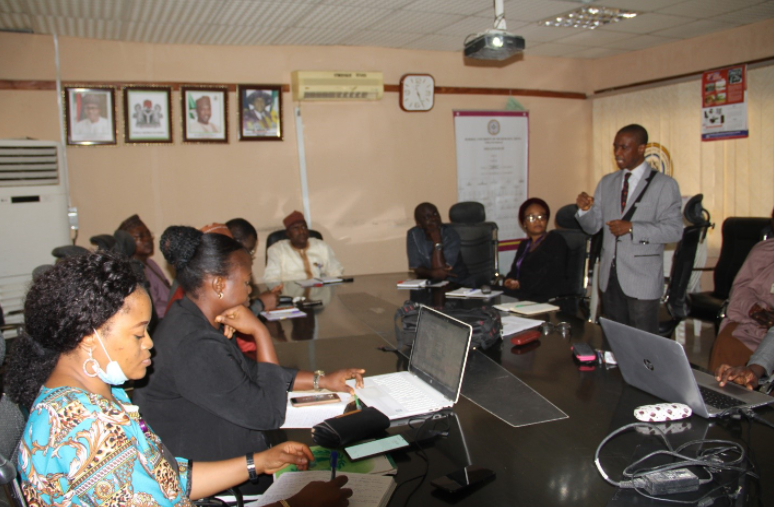
The pilot has recorded some substantial progress and has so far held two separate launch events for African Universities (March 2021), and for the Japanese Companies (April 2021). An online matching event for selected African universities and Japanese companies was also held in May 2021. In total, 35 universities and 8 companies applied to partake in the initiative. Among them, three (3) partnerships will receive in-depth technical assistance through the Kopernik. Kopernik will provide some facilitation and light support for 7 companies, which will work independently with 12 matched universities. A summary of the partnerships developed through the initiative is below.
Recipients of the In-depth Technical Support
| ACE/PASET Universities Involved | Companies | Potential Areas of Collaboration (to be finalized) |
| Moi University | SPEC Co.Ltd | Conduct the testing of soil samples from Kenya. After the soil testing, conduct soil and STEIN (soil hardening agent made by SPEC) mixture research and test the right consistency. |
| University of Ghana | Challenge Co.Ltd | Collaborate in localizing an earthquake detection and alarm system to suit the local condition in Ghana. Measure the impact of the evacuation training in the case of earthquake. |
| Nelson Mandela African Institute of Technology | Nikken Co.Ltd | Identify potential test site and use cases for CLINCA 205 (Water disinfecting ceramic sand) in Tanzania. Joint research on how the product could treat and improve water condition in Tanzania. Develop a product distribution plan. |
Recipients of the Light Support
| Universities | Companies |
| Université Gaston Berger de Saint-Luis | Challenge Co.Ltd, Oui Co.Ltd, LocationMind |
| Ahmadu Bello University | Oui Co.Ltd |
| University of Ghana | Oui Co.Ltd |
| Institute of Mathematics and Physical Science | LocationMind |
| Federal University of Technology Owerri | LocationMind |
| Moi University | Marubeni Corporation, Nikken Co.Ltd. |
| Kwame Nkrumah University of Science of Technology | Nikken Co.Ltd., LocationMind(TBD) |
| Jaramogi Oginga Odinga University of Science and Technology | SEMCO Co. Ltd. |
| Egerton University | SEMCO Co. Ltd.pk7jolu6y6t |
| International Institute for Water and Environmental Engineering | Nikken Co.Ltd (TBD) |
| University for Development Studies | Nikken Co.Ltd (TBD) |
| Universidade Eduardo Mondlane | SPEC Co.Ltd (TBD) |
As a next step, the capacity assessment for technology adaptation has started for the three partnerships. From October 2021 to April 2022, testing and prototyping of the technology will take place and the dissemination of the initiative’s results is planned in May 2022.
Further questions on this initiative should be directed at Saori Imaizumi at simaizumi@worldbank.org






![A new and impactful online platform has launched to equip young African students with a repository to digitally house their credentials whilst directly connecting them to potential employers. The recruitment dashboard piloted under the Africa Centres of Excellence (ACE) Digital Skills Pilot Initiative provides a single platform for students/graduates and companies to match more efficiently, addressing the challenges of university- to-work transitions and improving recruitment practices in Africa. A first of its kind in Africa, this collaboration between the World Bank, the German Development Cooperation represented by Deutsche Gesellschaft für Internationale Zusammenarbeit (GIZ) GmbH and Digital Skills Accelerator Africa (DSAA) merges public and private sector engagement in a unique way, addressing Africa’s most pertinent issues, youth skills mismatch and youth unemployment. Through the ACE projects, the World Bank is providing funding to African universities to train their future workforce, whilst GIZ and DSAA connect international and African companies to training and hiring talented African students. The recruitment dashboard is being piloted in two ACE universities, Kwame Nkrumah University of Science and Technology (KNUST) in Ghana and Moi University in Kenya, with just under 200 undergraduate engineering and computer science students who have collectively completed more than 110 courses, receiving a total of 9,500 blockchain certificates through the platform. It allows students and recent graduates to create personalised profiles and upload their credentials online, that are fully accessible to multiple employers, thus significantly cutting down recruitment time and costs. IBM and FutureLearn provide access to over 150 free accredited courses to help students bridge the identified digital skills gap. Allowing for a seamless connection to recruiters, the dashboard provides a single space for companies to search and directly email potential recruits. “We have partnered with VerifyEd, a UK-based company, on this innovative platform to give recruiters easy access to a large pool of qualified and skilled potential workforce, whilst increasing student’s online visibility, giving them a competitive advantage”, says Halil Dundar, Practice Manager, Education Global Practice at the World Bank. “This investment has a great potential and supports Africa’s jobs and economic transformation agenda”. In the context of Invest for Jobs of the German Federal Ministry for Economic Cooperation and Development (BMZ), GIZ mobilises international and African companies through DSAA initiative. DSAA is an independent organisation focused on training highly skilled digital workforce talent in Africa, creating business opportunities for companies and individuals. Two member companies of DSAA, AmaliTech and getINNOtized, each with 300 vacancies in the 2021 calendar year, are participating in the recruitment dashboard pilot, providing a wide array of core digital skills- related job opportunities (both in-person and remote work) for the students. “We believe the ACE Recruitment Dashboard will augment our recruitment strategies to target graduates with IT, Computer Science, and Engineering backgrounds to join our AmaliTech Training Academy. This will enrich our pool of graduate recruits for free professional IT/digital skills training for employment pathways in the tech ecosystem.” Richard Botchway, AmaliTech’s HR Specialist (Diversity & Inclusion) says. The platforms filter functionality has been popular amongst recruiters. For Gideon Sackey, Dean of Students, getINNOtized: “Identifying the right candidate for the right job is always a hurdle for recruiters. This process is made simpler and efficient by the platform. The filtering features on the platform enable us to filter by skill, certifications, etc, saving time in our candidate selection process”. Jerry Kponyo, the Dean of Faculty at Kwame Nkrumah University of Science and Technology, one of the pilot universities, sees great potential and success of the recruitment dashboard: “Where recruiters are able to have access to such critical information [verified credentials], the students seeking employment would not have to struggle to communicate what they are capable of. The displayed certifications are self-advertising.” The World Bank, GIZ, DSAA and the various partners hope this initiative opens the doors for innovative use of blockchain technology in education on the continent; promotes a strong culture of micro-credentialing; creates an ecosystem promoting job opportunities for the African youth, as well as continued private and public collaboration. The results of the pilot are highly anticipated and will be key to the evolution of blockchain technology for the development of the African continent. About Invest for Jobs DSAA is supported by German Development Cooperation in the context of Invest for Jobs. Under the Invest for Jobs brand, the German Federal Ministry for Economic Cooperation and Development (BMZ) has put together a package of measures to support German, European and African companies in investment activities that have a high impact on employment in Africa. The Special Initiative on Training and Job Creation – the official title – offers comprehensive advice, contacts and financial support to overcome investment barriers. The development objective is to team up with companies to create good jobs and apprenticeships in the partner countries, of which there are currently eight, and to preserve them during the Covid-19 pandemic. Further information is available at www.invest-for-jobs.com About Africa Centers of Excellence Program The Africa Centers of Excellence (ACE) program is a series of regional higher education projects that aim to improve education, training and applied research at the post-graduate level in key priority fields, including science, technology, engineering, mathematics (STEM), agriculture, health, industry and related fields. The World Bank is supporting the overall ACE Digital Skills Pilot Initiative (launched in 2020) through a trust fund, the Korea-World Bank Partnership Facility. Further information is available at www.ace.aau.org](https://ace.aau.org/wp-content/uploads/2021/06/Picture1.jpg)