
 ACE Comms Team
When the Centre for Food Technology and Research (CEFTER) at Benue State University, Nigeria joined the Africa Centres of Excellence (ACE) Project in 2014, its mission was clear yet ambitious to lead the fight against post-harvest losses through cutting-edge research, education, and innovation. Ten years on, that vision has not only been realized but powerfully expanded. Today, CEFTER stands as a dynamic hub where science meets enterprise, policy meets practice, and food systems innovation transforms lives across Nigeria and beyond.
The Centre’s 10th Anniversary Celebration on November 7, 2024, marked a defining moment in its evolution. At the heart of the event was the commissioning of the Food Technology Innovation Complex (CEFTIC), a flagship facility that symbolizes CEFTER’s transition from an academic centre to a catalyst for industrial transformation. CEFTIC houses six fully functional mini factories dedicated to cassava processing, tomato paste production, and food equipment fabrication, a living laboratory where innovation is not abstract but tangible, measurable, and scalable.

CEFTER’s impact extends well beyond academia. Through its commercial arm, CEFTER Foods Nigeria Ltd., the Centre has bridged the gap between research and real-world enterprise, generating over US$1 million in revenue and proving that university-driven entrepreneurship can thrive. This model has empowered local value chains and demonstrated that African universities can be both centres of learning and engines of economic growth.
Equally transformative has been CEFTER’s commitment to inclusion. The Centre’s sustained engagement with refugee communities, internally displaced persons, and underserved populations was highly commended during the anniversary celebrations. Its hygiene and nutrition outreach programs particularly among Cameroonian migrants in Benue State have strengthened community resilience and improved livelihoods, turning science into social impact.
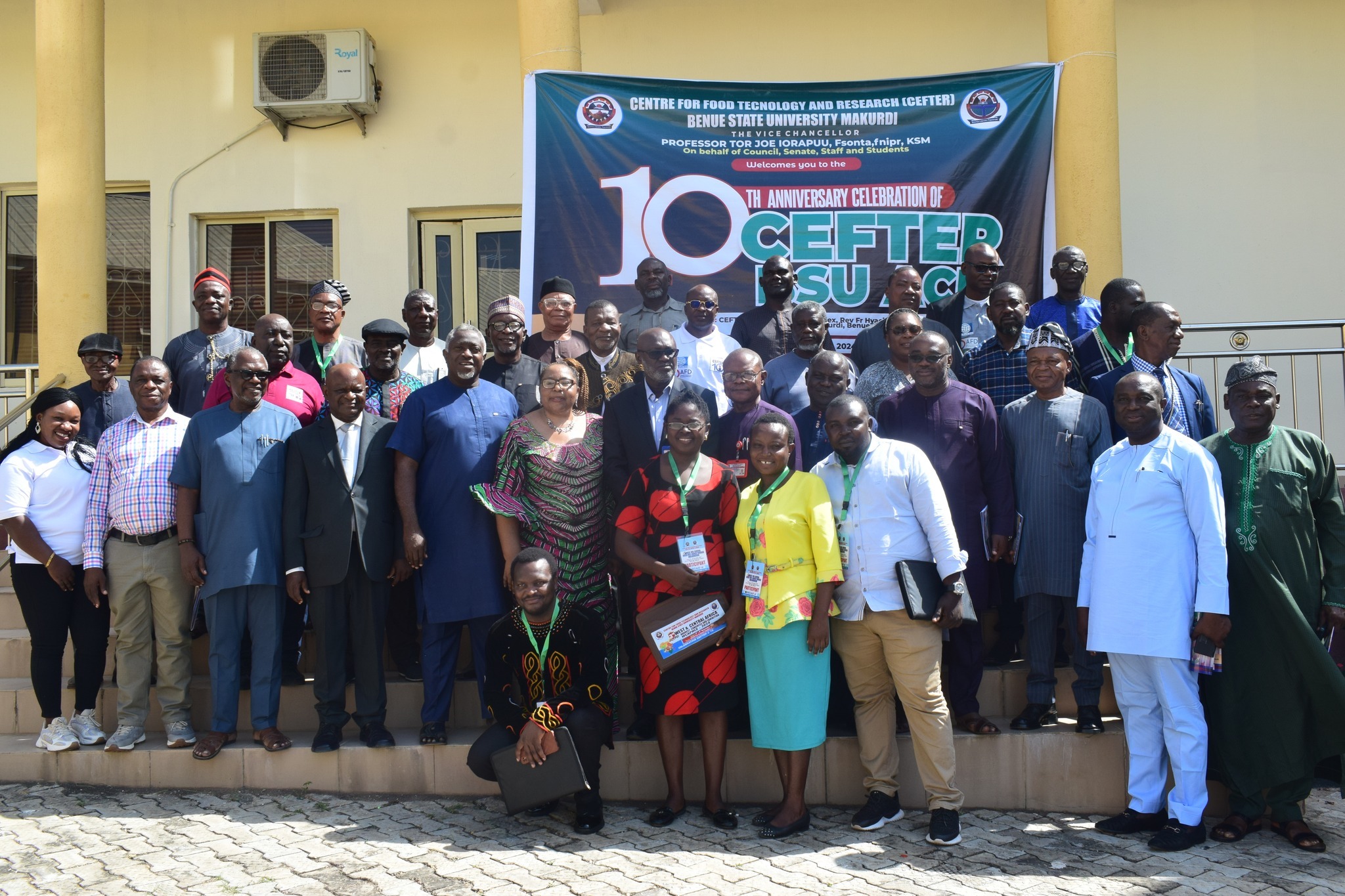
The milestone also set the stage for a new phase of growth. CEFTER announced plans for a Faculty of Agriculture at Benue State University a forward-looking initiative designed to train the next generation of agri-food innovators equipped with both technical expertise and entrepreneurial acumen. The faculty will complement CEFTER’s postgraduate and research mission, embedding food systems thinking at the heart of the university’s academic agenda.
As CEFTER steps into its second decade, its journey reflects a powerful truth: with vision, partnerships, and purpose-driven research, African universities can redefine how knowledge feeds economies, empowers communities, and secures the continent’s food future.
What also stood out during the celebrations was the chorus of institutional endorsements from government leaders, traditional rulers, and national policymakers. They recognized CEFTER as a vital node in Nigeria’s food security ecosystem and urged new models of sustainability as donor funding would wind down in 2025. Calls were made for greater domestic investment, policy backing, and private sector partnerships to secure the centre’s future.

CEFTER’s 10th anniversary marked a decade of translating research into real solutions for Africa’s food systems. By linking innovation with enterprise and community impact, it has established itself as a critical player in the region’s response to food insecurity. With a decade of results to build on, the Centre is charting a future where its work continues to strengthen livelihoods, improve nutrition, and support sustainable development across the continent.