Championing Sustainability and Institutional Transformation in African Universities


At the 10th Anniversary celebrations of the Africa Higher Education Centers of Excellence (ACE) Program, a high-level Vice Chancellors Roundtable held on April 8, 2025, brought together leaders from African universities to address one of the most urgent questions facing the ACE initiative today: How can Africa sustain and institutionalize the impact of the ACEs beyond development partner support? The roundtable provided a critical space for the vice chancellors to reflect on lessons from a decade of the ACE program’s implementation and explore pathways for long-term integration and impact.

Chaired by Ms. Trina Haque, Regional Practice Director for People (Human Development), World Bank and moderated by Ms. Roberta Bassett, Global Lead for Tertiary Education, World Bank, the session underscored a shared commitment to embedding the ACEs into the strategic frameworks of host institutions. Rather than functioning as isolated development partner-funded projects, Vice Chancellors were encouraged to envision the ACEs as institutional engines of innovation, revenue generation, and regional impact.


Institutional Experiences: Models of Innovation and Ownership

The Vice Chancellors shared insights on how their institutions have successfully implemented and managed the ACE initiative, highlighting innovative strategies adopted to align with the program’s overarching vision of enhancing the quality and standards of higher education across the continent.

Prof. Patrick Kyamanywa of Uganda Martyrs University emphasized ways the center catalyzed curriculum reform and community engagement at the university. He described how their ACE in Agri-Economy transformed academic programs, infrastructure, and outreach. The centre’s market-relevant curriculum and focus on 21st-century skills attracted students from across Africa and even garnered support from the Ugandan government. In addition, the university fostered cross-border partnerships.  Prof. Kyamanywa credited the initiative with instilling a culture of data-driven decision-making, evidence-based management, and social innovation.

Prof. Doutor Manuel Guilherme of Eduardo Mondlane University highlighted aligning curriculum with market demands. He noted ways Mozambique’s largest public university used the ACE framework to tighten links between education and industry, especially in mining, oil, and gas sectors. Through tracer studies and continuous curriculum updates, the university now delivers job-ready graduates equipped with both technical and soft skills. National legislation also requires companies to engage directly with students on campus—an opportunity that Eduardo Mondlane is leveraging to align academic offerings with real-world labor market needs.

Dr. Mahmadou Sheriff, representing Université Félix Houphouët-Boigny, Côte d’Ivoire emphasized driving institutional ownership by ensuring that the ACE is fully embedded in the university’s development strategy. He noted that the university’s management allocated prime land for ACE infrastructure, and staff are recruited and paid by the university—fostering full operational integration. He noted that the ACE catalyzed institution-wide accreditation reforms, income generation, and research excellence. However, he cautioned that development partner phase-out poses risks, and called for renewed efforts in audit compliance, quality control, and long-term financing.

Dr. Daouda Keita, vice chancellor of L’institut Superior des Mines et de la Geologie de Boke in Guinea (ISMG) presented a notable example of leveraging industry partnerships, demonstrating ACEs collaborating closely with national industries and agencies. At ISMG, partnerships with the mining sector have yielded infrastructure support, research funding, student internships, and curriculum co-design. By allocating land and staff, the university demonstrated strong institutional support. Dr. Keita called the ACE “a cornerstone of national relevance,” underscoring its role in linking academia with the labor market.

Finally, Dr. Wondossen Mulugeta Gewe of Addis Ababa University, Ethiopia underscored that the ACEs’ priorities are well anchored in national policies. Noting that the university’s three centers of excellence—focused on railway development, water research, and drug development are directly aligned with Ethiopia’s development priorities. The centers have enhanced gender equity, internationalization, and academic-industry partnerships through their diverse initiatives. However, he highlighted that the project’s closure in 2025 could affect its impact.  He urged university leadership to formally adopt the ACEs into the institutional strategy and operational budgets.


Cross-Cutting Insights and Observations

The roundtable revealed several common insights across institutions, including the data-driven culture of the ACEs which has helped introduce a strong culture of evidence-based planning – thus informing curriculum design, partnerships, and resource allocation. Other insights shared included enhanced infrastructure and institutional visibility; curriculum reform incorporating market driven and industry-aligned programs and skills training to enhance graduate employability; and institutional integration to ensure continuity.

Policy recommendations were made to sustain efforts to scale the project at institutional levels as well as to foster continuity. These recommendations comprise introducing sustainable scholarship schemes to maintain enrolment levels; fostering inter-ACE collaboration to promote shared research, curricula, and mobility; developing national policies that enable continued ACE post-development partner funding; and building internal audit and quality assurance systems to reduce external compliance burdens.

Conclusively, the Vice Chancellors Roundtable discussion highlighted the profound influence of the ACE initiative on higher education transformation across Africa serving as a blueprint for institutional growth, continental collaboration and catalyst for knowledge-led development, emphasizing the need to embed the ACEs into the universities’ operation systems.

ACE Water Network Unveils Strategic Blueprint for Sustainable Excellence

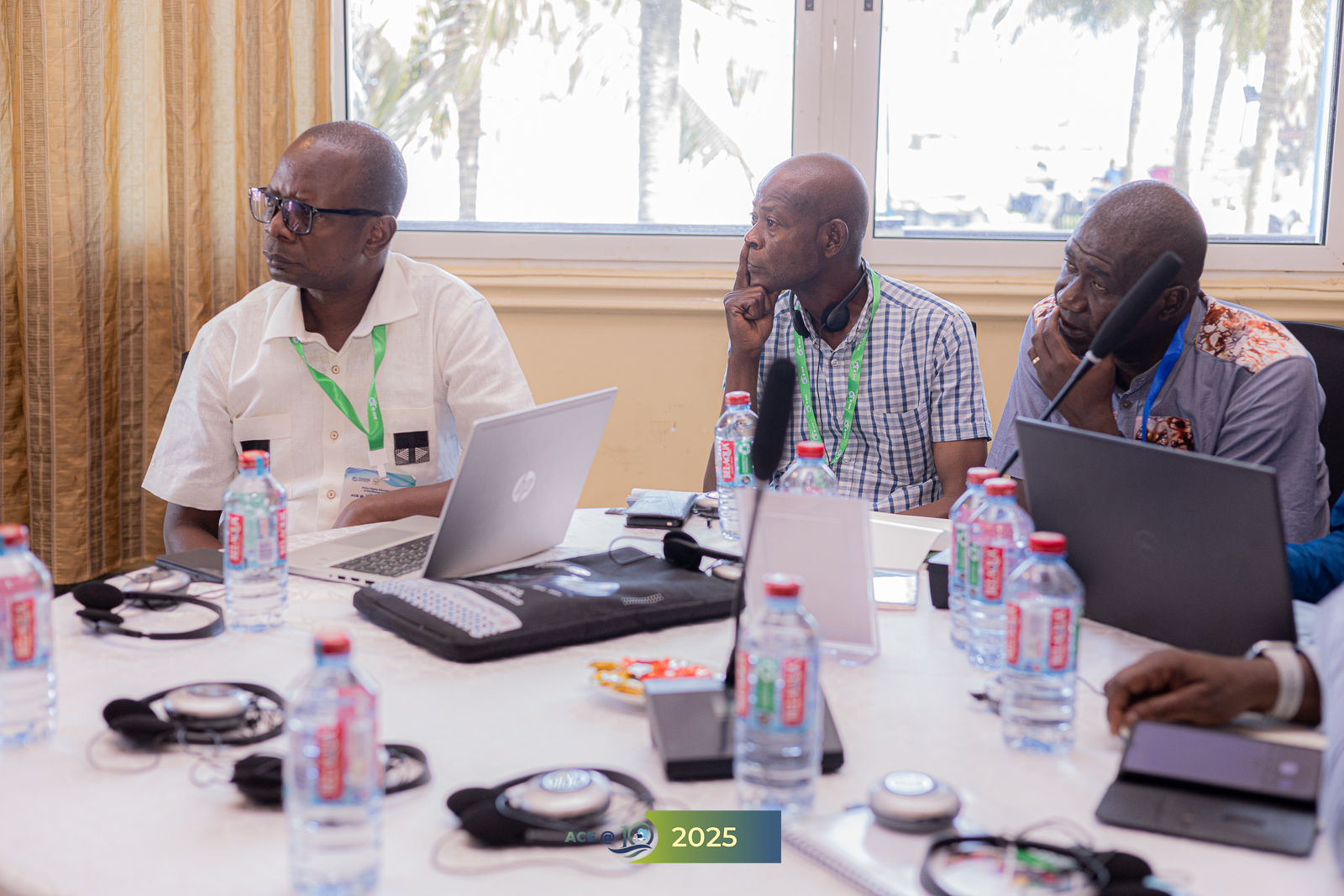
Reflecting on best practices and learning lessons has been central to the ACE initiative’s success. Throughout its implementation, the programme has provided forums through its regional workshops among other key events, for centres across agriculture, health, water, education, energy and other critical themes to exchange knowledge, leverage each other’s expertise, adopt proven approaches, and continuously improve to advance Africa’s development. The ACE@10 Celebrations, held in Accra, Ghana, from 7th to 9th April 2025 offered yet another opportunity for participating centres to reflect on their achievements in translating research into impact, contributing to policy and industry, and cultivating partnerships with key stakeholders all geared towards sustainability.

The breakout session on Water convened representatives from eight water-focused ACE centres from West and East Africa. United by their commitment to translating research into practical solutions, these centres leveraged the session to refine key strategies that will support them to deliver tangible improvements in water management, bolster community well-being, and sustain their efforts across the continent, post the current funding phase of the project.

Aligning research with national priorities

A central theme running through the discussions at this session was the alignment of research undertaken by the centres with national priorities. As the project nears its conclusion, the imperative to ensure centers’ efforts continue to address real-world water-management challenges in the sub-region and directly respond to pressing policy and implementation gaps were highlighted. To enhance relevance and promote practical use of their research findings, the centres committed to adopting innovative approaches in communicating research outputs – leveraging policy briefs, clear infographics and short executive summaries that distill complex data into actionable recommendations policymakers and key stakeholders can readily understand.

Expanding Demand-Driven Professional Short Courses

Building on the ACE program’s achievement of training over 52,000 professionals over the past decade, participants showcased the significance of offering demand-driven short courses to amplify impact and underscored the need for this to be expanded. These industry-relevant offerings present an avenue to maximize impact, and therefore centers committed to continue tailoring curricula to local needs, scaling enrolment in these courses, and equipping industry practitioners with the skills needed to apply research findings to real world solutions.

Embracing a Nexus Vision to Strengthen Cross-Sector Partnerships

Recognizing water’s intrinsic connections to health, agriculture, energy and other sectors, the session explored a “One-Water” nexus model—mirroring One-Health approaches—to foster transdisciplinary research. Centers highlighted the need to strengthen ties not only within academia but also to bring industrial partners fully on board. The discussions highlighted the necessity of formalizing network structures, including governance around intellectual property and revenue-sharing, to ensure equitable partnerships. Industrial stakeholders were encouraged to join as full partners, bringing practical insights and co-funding opportunities.

Securing Sustainability

While the ACE Water centers have already achieved high standards of research excellence, sustaining the momentum requires more strategic planning and targeted initiatives. During the thematic breakout session, the eight participating centers identified a mix of strategies to secure long-term viability and these included:

  • Endowment Funds: Seeded by center alumni, philanthropic donors, and host universities, endowments can underwrite core research costs and provide financial support for the centers.
  • National Fundraising Drives: Leveraging high-profile events and public-sector partnerships to tap into domestic research budgets and health levies.
  • Commercial Services & Innovations: Centres are to package high-quality laboratory diagnostics, training modules, and consultancy as revenue-generating service and ultimately turn cutting-edge work into self-sustaining enterprises.
  • Regional Networking & Alumni Hubs: Cultivating a pan-African community and rotating secretariat roles among centres, the ACE network can maintain momentum, share best practices and jointly pursue larger grants.

By the close of the session, the involved centres had not only charted a roadmap for impactful research and robust networks but also renewed their commitment to a sustainable, nexus-oriented future for water management in Africa.

Driving Excellence in Africa’s Higher Education: Key Achievements and Lessons from the ACE Impact Journey

The tenth anniversary of the Africa Higher Education Centers of Excellence (ACE) Program held in April 2025, offered a pivotal moment for reflection, learning, and strategic dialogue. Plenary session five reflecting on the ACE journey thus far, bringing to light the immense strides made by the program in transforming Africa’s higher education landscape over the past decade.

Dr. Halil Dundar, Education Global Manager at the World Bank opened the session by commending the program’s achievements and emphasized the importance of consolidating lessons learned to strengthen future higher education initiatives in Africa.  He underscored the important contribution of the centers of excellence to Africa’s development and advancement, given their critical role in training the next generation of scientists, researchers, and professionals to tackle the continent’s most pressing challenges across various sectors including health, agriculture, STEM, energy, and mining sectors.

The session featured presentations by Dr. Sylvia Mkandawire, Senior Program Manager for the ACE Impact at the Association of African Universities (AAU), and Dr. Jude Ssebuwufu, ACE II Coordinator at the Inter-University Council for East Africa (IUCEA). They presented the key achievements, challenges, and lessons learned from the ACE journey, alongside recommendations to further strengthen future initiatives.

Key Achievements: Scaling Impact Across the Continent

The presentations by the AAU and IUCEA indicated that as part of the ACE program’s objectives to expand higher education access and inclusion, over 90,000 students have been enrolled under the program­ ­ including 7,650 PhD and 30,200 Master’s students, 52,629 learners in professional short-term courses, and 26,291 regional students across borders. Notably, 29,696 of these students are women, reflecting a deliberate commitment by the program to gender inclusion and equitable access in postgraduate education.

In terms of raising quality through accreditation and infrastructure, more than 620 academic programs have been accredited through national, regional, and international bodies. International accreditation partners include the Agency for Quality Assurance through Accreditation of Study Programmes (AQAS, Germany) and Accreditation Agency for Study Programmes of Engineering, Information Science, Natural Sciences and Mathematics (ASIIN, Germany), ensuring global relevance and competitiveness. In addition, the ACE program has invested in modern learning environments, commissioning 51 new buildings with smart classrooms and digital learning tools, with nine (9) more facilities nearing completion.

The contribution of the centers of excellence to global knowledge has been impressive, with over 10,000 research publications in high impact journals with some being published in collaboration with regional and global partners. At least 400 formal research collaborations and 73 peer-reviewed articles have emerged from ACE-affiliated networks. Additionally, 61 capacity-building workshops, 52 regional network scholarships, and eight (8) start-ups have been launched through ACE support structures. Importantly, 20% of students have accessed internships or academic exchanges, built practical skills while promoting cross-border academic mobility.

Moreover, in bridging the employability gap, targeted skills training has led to notable improvements in graduate employability, particularly for students in applied and industry-linked programs. These interventions are helping bridge the critical skills gap in Africa’s key sectors, while also contributing to national and regional development agendas.

Good Practices

One of the pivotal lessons learned from the ACE initiative is the critical role of proactive policy development in supporting international accreditation. Establishing comprehensive accreditation policies with clear implementation guidelines that ensure universities are structurally prepared before beginning the accreditation journey.

Equally significant is the use of structured benchmarking exercises such as the PASET benchmarking framework. This tool has been particularly effective in preparing ACEs for international recognition by identifying performance gaps and facilitating targeted interventions.

Operational efficiency also emerged as a key success factor. Timely procurement processes contributed to meeting project timelines, avoiding bottlenecks, and ensuring the smooth rollout of program activities. Moreover, teamwork across departments and within project teams enabled division of labor, better coordination, and early completion of targets. Perhaps most importantly, institutional ownership and acceptance of the ACE initiative were essential for project sustainability. When the host universities internalized the project’s goals and took active responsibility for its execution, it fostered long-term commitment, accountability, and a culture of excellence.

Challenges and Lessons Learned

Several challenges emerged throughout the implementation of the ACE initiative, particularly around regional integration and quality assurance. Variations in national scholarship policies created inequities in student access and hindered regional enrolment targets. Immigration barriers, including delayed permit processing and policies separating students from their families further disrupted academic mobility. Additionally, tuition disparities based on nationality and language limitations discouraged outward mobility and restricted the scope of intra-African academic exchange. On the quality front, many centers struggled to meet the rigorous demands of international accreditation, with lengthy timelines.

Key Recommendations

To promote regional student mobility across Africa, a multifaceted approach is needed. Targeted awareness campaigns should be launched to emphasize the strategic value of regional exchange programs—not only in building human capital but also in fostering cross-border collaboration and shared development goals. These campaigns should showcase success stories and opportunities available through ACE programs to encourage buy-in from students, families, and institutions.

Simultaneously, immigration bottlenecks such as delays in processing study permits and restrictive travel policies must be addressed through systematic assessment and high-level dialogue with governments to ease cross-border academic movement.

Advocating for equitable regional tuition policies through entities like the African Union and Regional Economic Communities (RECs) such as ECOWAS, SADC, and EAC is essential to reducing financial barriers.

In addition, universities must proactively enhance language accessibility by establishing language support centers and offering multilingual learning resources to improve inclusion and success rates for non-native speakers.

Stronger academia-industry linkages should be incentivized through tailored reward systems that recognize ACEs successfully leveraging partnerships for applied research, co-created curricula, industrial internships, and commercialization of innovations.

Sustaining the Vision for Africa’s Knowledge Future

In conclusion, the ACE program’s impactful contributions and successes makes a compelling case for regional collaboration, policy reform, and investment in higher education as a cornerstone of Africa’s development agenda. It has proven that African universities can deliver high-quality training, produce impactful research, and shape policies that respond to the continent’s evolving needs.

About the ACE Model

Launched in 2014, the ACE Program is a regional higher education initiative supported by the World Bank in partnership with participating African governments. Building on its early successes, the program has attracted additional development partners most notably the Agence Française de Développement (AFD), which co-funds the third phase launched in 2019.

Coordinated by the Association of African Universities (AAU) and the Inter-University Council for East Africa (IUCEA), the ACE model adopts a results-based financing approach, linking disbursements to measurable results in research, teaching, and institutional development. To date, over 80 Centres of Excellence in 20 African countries have been supported, with the goal of improving postgraduate education and research in priority sectors.

Shaping the Future of Responsible Mining and Ensuring Sustainable Environment: ACE Mining Centres Reflect on Progress During ACE@10

The Africa Centers of Excellence (ACE) program’s 10th anniversary celebrations in April 2025, offered a space for deep reflection, collaboration, and future-focused dialogue in its breakout sessions. The mining session, moderated by Xavier Michel reflected on forward-thinking strategies towards environmental sustainability.  The ACE program centers across West, East, and Southern Africa shared their unique perspectives on responsible mining and sustainable environmental practices, highlighting their individual and collective contributions to responsible mining. Additionally, participants at this session deliberated on burgeoning environmental, social, and governance challenges that bedevil Africa’s mining ecosystem, and charted a clear vision toward its sustainability.

Six ACEs—CEFORGRIS from Burkina Faso, CEMS from Côte d’Ivoire, EMIG from Niger, CEA-MEM from Senegal, CS-OGET from Ethiopia, and ACESM from Zambia—participated in this session. These centers, located in Africa’s mineral-rich corridors, have become beacons of research excellence and innovation in mining and extractive sciences.

With the overarching theme focused on responsible mining and its contribution to a sustainable environment, the session was a dynamic space for shared learning. Discussions revolved around four interrelated pillars: student and faculty development; advancing research, translating research into industry and policy impact; and partnerships and sustainability. Each centre presented compelling narratives that painted a rich tapestry of institutional progress grounded in real-world challenges and triumphs.

On student and faculty development, leaders of the various centers emphasized efforts to enhance academic programs in mining, increase postgraduate enrolments, and foster faculty development through international mobility and mentoring of early-career mining and environment researchers. Initiatives profiled included curriculum modernization, faculty exchange programs, and targeted recruitment to promote diversity and inclusion in mining education. EMIG shared its targeted efforts to attract more women into mining-related programs, while ACESM highlighted its industry-linked PhD training model that embeds students within mining companies for hands-on practical experience and on-the-job training.

When it came to advancing research, centres celebrated milestones in cutting-edge work on mineral recovery technologies, environmental impact assessments, and mine safety innovations. CEA-MEM’s work on sustainable artisanal mining techniques stood out as a model of locally responsive research with global relevance.

One of the most inspiring moments was the accounts of research translation into policy and industry impact. CS-OGET detailed its collaboration with the Ethiopian Ministry of Mines to shape regulatory reforms, while CEMS illustrated how its geotechnical research was informing mining protocols in Francophone West Africa. These stories underscored growth among the ACE centers in closing the gap between academic inquiry and real-world impact.

In the discussions on partnerships and sustainability, centre leaders spoke candidly about the evolving nature of funding, the need for diversified income streams, and the critical role of long-term partnerships with industry, government, and international collaborators. CEFOGRIS shared a strategy of embedding its alumni into key public agencies to drive future collaboration from within.

Moving forward, future focus areas identified included critical minerals research, climate-smart mining practices, and digitization and automation of mining processes. Centre leaders called for enabling conditions such as enhanced infrastructure, stronger regional collaboration frameworks, and increased policy alignment with academic outputs.

The session concluded with a collective commitment to advancing responsible mining practices that align with sustainable development goals. The moderator, Xavier Michel in his closing remarks, noted that the shared experiences and forward-looking strategies reflected the ACE program’s core ethos: centres of excellence rooted in local realities, producing knowledge for global good.

The insights from the Mining Breakout Session, later shared during the plenary on the event’s third day, reinforced a compelling truth: Africa’s path to responsible and sustainable mining is already being paved by the Centres of Excellence program through science, partnerships, and the unrelenting dedication of its researchers and educators.

As the ACE initiative steps into its next decade, these mining-focused centres stand poised to lead Africa into a new era, where the continent’s rich natural resources are harnessed not just for economic gain but for environmental stewardship, social inclusion, and sustainable development.

Driving Excellence in Africa’s Higher Education: Key Achievements and Lessons from the ACE Impact Journey

The tenth anniversary of the Africa Higher Education Centres of Excellence (ACE) Program held in April 2025, offered a pivotal moment for reflection, learning, and strategic dialogue. The fifth plenary session focused on reflecting on the ACE journey thus far, bringing to light the immense strides made by the ACE initiative in transforming Africa’s higher education landscape over the past decade.

Dr. Halil Dundar, Education Global Manager at the World Bank opened the session by commending the program’s achievements and emphasized the importance of consolidating lessons learned as the initiative prepares for its next phase. He stressed that the future of Africa’s development hinges on strengthened centers of excellence that train the next generation of scientists, researchers, and professionals to tackle the continent’s most pressing challenges across sectors including health, agriculture, STEM, energy, mining, and more.

The session featured presentations by Dr. Sylvia Mkandawire, Senior Project Manager for the ACE Impact at the Association of African Universities (AAU), and Dr. Jude Ssebuwufu, ACE II Coordinator at the Inter-University Council for East Africa (IUCEA). They presented the key achievements, challenges, and lessons learned from the ACE journey, alongside recommendations for the future.


The ACE Model: A Pan-African Investment in Knowledge and Skills

Launched in 2014, the ACE Program is a regional higher education initiative supported by the World Bank in partnership with participating African governments. Building on its early successes, the program has attracted additional development partners—most notably the Agence Française de Développement (AFD), which co-funds the third phase launched in 2019.

Coordinated by the Association of African Universities (AAU) and the Inter-University Council for East Africa (IUCEA), the ACE model adopts a results-based financing approach, linking disbursements to measurable results in research, teaching, and institutional development. To date, over 80 Centres of Excellence in 20 African countries have been supported, with the goal of improving postgraduate education and research in priority sectors.


Key Achievements: Scaling Impact Across the Continent

As part of the ACE program’s objectives to expand higher education access and inclusion, over 90,000 students have been enrolled­­­ ­ including 7,650 PhD and 30,200 Master’s students, 52,629 learners in professional short-term courses (PSTCs), and 26,291 regional students across borders. Notably, 29,696 of these students are women, reflecting a deliberate commitment to gender inclusion and equitable access in postgraduate education.

In terms of raising quality through accreditation and infrastructure, more than 620 academic programs have been accredited through national, regional, and international bodies. International accreditation partners include Agency for Quality Assurance through Accreditation of Study Programmes (AQAS, Germany) and Accreditation Agency for Study Programmes of Engineering, Information Science, Natural Sciences and Mathematics (ASIIN, Germany), ensuring global relevance and competitiveness. In addition, the ACE program has invested in modern learning environments, commissioning 51 new buildings with smart classrooms and digital learning tools, with nine (9) more facilities nearing completion.

To boost research, innovation, and industrial relevance, the centers have produced over 10,000 research publications, many in collaboration with regional and global partners. At least 400 formal research collaborations and 73 peer-reviewed articles have emerged from ACE-affiliated networks, in addition to 61 capacity-building workshops, 52 regional network scholarships, eight (8) start-ups launched through ACE support structures. Importantly, 20% of students have accessed internships or academic exchanges, built practical skills while promoting cross-border academic mobility.

Moreover, in bridging the employability gap, targeted skills training has led to notable improvements in graduate employability, particularly for students in applied and industry-linked programs. These interventions are helping bridge the critical skills gap in Africa’s key sectors, while also contributing to national and regional development agendas.


Lessons Learned

Key success areas for the ACE model include regional cooperation that has strengthened cross-country collaboration in higher education, influencing national policy and institutional reforms, results-based financing tying disbursements to measurable outputs, ultimately, encouraging performance-driven education management as well as policy reform impact.


Persistent Challenges

Key challenges noted include regional student mobility in line with language barriers, and strict immigration processes, program accreditation hurdles, and inconsistent national financing policies and models.


Recommendations

To combat these challenges, there is the need to promote regional student mobility, enhance language accessibility by establishing language support centers, streamline accreditation processes, and advocate for common or similar financing policies through regional economic blocs.


Sustaining the Vision for Africa’s Knowledge Future

In conclusion, the ACE program has made a compelling case for regional collaboration, policy reform, and investment in higher education as a cornerstone of Africa’s development agenda. It has proven that African universities can deliver high-quality training, produce impactful research, and shape policies that respond to the continent’s evolving needs.

RÉSUMÉ DU JOUR 1 DU 9ÈME ATELIER RÉGIONAL DU CEA IMPACT

Le 9e atelier régional du CEA Impact a débuté à Marrakech, au Maroc, le 29 mai 2023. La première journée de l’atelier a été marquée par la tenue de 7 réunions clés.

  • Réunion du Comité de Pilotage du Projet

Le Comité de Pilotage du Projet (CPP) du CEA Impact s’est réuni dans la matinée à l’hôtel Riad Ennakhil pour délibérer sur l’avancement de la mise en œuvre du projet. La réunion du CPP était présidée par le professeur Kouami Kokou, membre du CPP du Togo, et comprenait des représentants des 11 pays mettant en œuvre le programme CEA Impact, de l’Association des universités africaines, de la Banque mondiale, de l’Institut de Recherche pour le Développement (IRD) et de l’Agence française de Développement. Olusola B. Oyewole, Secrétaire général de l’AUA, Virginie Delisée-Pizzo, Chef du Département de l’éducation, AFD Paris (connectant virtuellement) et Scherezad Latif, Practice Manager, Région Afrique de l’Ouest et du Centre, Banque mondiale, ont participé à la cérémonie d’ouverture. Dr Sylvia Mkandawire, la Gestionnaire principale du projet CEA Impact, a fourni les mises à jour du projet, et elle a été soutenue par Mme Adeline Addy (S&E, AUA) ; M. Frank Adjei (Finances, AUA) ; Maud Kouadio IV (Décaissements du Projet, Banque mondiale) ; et M. Harry Crimi (Restructuration du Projet, Banque mondiale). Gregory Giraud de l’IRD a expliqué le soutien que l’IRD apporte aux centres CEA Impact. Le CPP a également délibéré sur les stratégies de pérennisation des acquis du projet CEA Impact au-delà du financement de la Banque mondiale. Dr. Ekua Bentil, la Responsable de l’équipe de travail du projet CEA Impact de la Banque mondiale, a également participé et a présenté les prochaines étapes et les remarques de clôture.

  • Réunion des experts

La réunion des experts s’est déroulée parallèlement à la réunion du CPP à l’hôtel Riad Ennakhil. L’objectif de cette réunion était de permettre aux experts de partager leur expérience et leur retour d’information sur les missions effectuées dans les centres. Cette réunion a également permis d’examiner les stratégies visant à aider les centres à obtenir davantage de résultats conformément aux plans de restructuration des projets convenus pour chaque centre. Le groupe d’experts en la matière est une équipe qui contribue au soutien et à la supervision de la mise en œuvre opérationnelle et technique des Centres du CEA Impact. Ces experts indépendants sont sélectionnés sur la base de leur expertise académique et/ou disciplinaire relative aux Centres CEA Impact, et de leur expérience internationale dans le domaine de l’enseignement supérieur et/ou de la direction d’université.

  • Réunion sur la passation de marchés

La session sur la passation de marchés s’est tenue dans l’après-midi au Palm Plaza Hotel and Spa et les participants étaient des responsables de la passation de marchés des 53 centres. L’objectif était de s’assurer que les contrats de passation de marchés soient mis en œuvre avec succès par les centres. La présentation était divisée en deux parties : les meilleures pratiques, les défis communs et le partage d’expérience dans la gestion des contrats de marchés publics, et les rôles communs et spécifiques des responsables de la passation de marchés au sein d’une équipe de gestion des contrats. Les points forts de cette session ont été les suivants :

  1. Les responsables de la passation des marchés ne sont pas des gestionnaires de projets ou de contrats.
  2. Une planification adéquate et l’attribution de rôles aux membres de l’équipe de gestion des contrats sont des conditions préalables à une mise en œuvre réussie du contrat.
  3. Les rôles transversaux à toutes les catégories de passation de marchés ont été mis en évidence : négociation et attribution des contrats, documentation des contrats, gestion des relations, gestion des risques et gestion des modifications des contrats.
  4. Les rôles spécifiques aux différentes catégories de passation de marchés ont également été soulignés.


  • Gestion financière

La session parallèle sur la gestion financière et les décaissements s’est concentrée sur les aspects de gestion financière du projet et a été animée par l’équipe fiduciaire de la Banque mondiale et de l’AUA. La session a fourni des conseils et des éclaircissements aux responsables financiers du Centre concernant les directives de gestion financière de la Banque mondiale. La session a fourni un bref aperçu de l’état des réalisations des centres et des changements proposés pour l’indicateur lié aux décaissements six (ILD 6). Au cours de la réunion, les animateurs ont mentionné qu’il était essentiel d’accélérer les progrès sur l’ILD 6. Actuellement, l’état de réalisation de l’ILD 6 est de 33 % pour les centres du premier CEA Impact et de 32 % pour les centres du deuxième CEA

Impact. La nécessité d’accélérer les progrès de la mise en œuvre a été soulignée afin que les objectifs souhaités soient atteints. La session a également discuté des modifications proposées au DLR 6 et celles-ci comprenaient les éléments suivants :

  1. Le solde restant du DLR 6.4 est réaffecté aux 3 autres sous-indicateurs du DLR6.
  2. Une augmentation du coût unitaire pour le DLR 6 a été communiquée et cela prendrait en charge les fonds non atteints au titre du DLR 6
  3. Il reste trois autres cycles de vérification pour le projet, à savoir août 2023, février 2024 et août 2024.


  • Sauvegardes

La session parallèle sur les sauvegardes environnementales et sociales (sauvegardes E&S) a duré environ 4 heures et comprenait un large éventail de discussions sur les questions de sauvegardes E&S relatives au projet CEA Impact. Les points abordés lors de cette session faisaient partie des principaux défis et difficultés soulevés lors des tables rondes virtuelles, et de ceux identifiés par les experts de la Banque mondiale et de l’AUA en matière de sauvegarde E&S au cours des six derniers mois. La session était dirigée par Gina Consentino de la Banque mondiale et Williams Dzonteu, spécialiste des sauvegardes E&S de l’Association des Universités Africaines. Les points clés suivants ont été discutés :

  1. Chaque site où les travaux ont commencé doit être visité par la Banque mondiale et il est important que le projet veille à ce que ces visites aient lieu.
  2. Les centres doivent contrôler les aspects environnementaux, sociaux, sanitaires et de sécurité sur tous les chantiers en cours et produire des rapports de contrôle.
  3. Chaque Centre doit préparer et transmettre à la Banque mondiale et à l’AUA un rapport trimestriel de suivi/surveillance sur tous les aspects des sauvegardes E&S.
  4. Le niveau de mise en œuvre/suivi du mécanisme de règlement des griefs dans chaque centre.
  5. Le niveau de mise en œuvre et de suivi des politiques de lutte contre le harcèlement sexuel par les centres
  6. Les difficultés rencontrées par chaque centre.


Pour chacun des points discutés, des recommandations claires ont été faites aux spécialistes E&S des différents centres, afin d’assurer une meilleure prise en compte des aspects liés à la sauvegarde tout au long du cycle de vie du projet CEA Impact.


  • Suivi et Evaluation

La session parallèle du suivi et évaluation a été organisée pour les responsables du suivi et évaluation des CEA participants. L’objectif de cette session était d’informer les responsables du suivi et évaluation des changements apportés aux protocoles de vérification et d’établissement de rapports du projet. En raison de la restructuration en cours du projet, des fonds supplémentaires ont été alloués à des résultats spécifiques liés aux décaissements (RLD) et, dans certains cas, les fonds alloués ont été réduits. Dans le cadre de la restructuration, la Banque mondiale a également introduit plusieurs changements à l’échelle du projet dans les protocoles de vérification des indicateurs et des résultats liés aux décaissements. Il s’agit notamment de changements dans le processus de vérification du RLD 2 (impact sur le développement), d’augmentations du coût unitaire pour l’accréditation des programmes internationaux et de changements dans la manière dont les fonds peuvent être gagnés dans le cadre du RLD 5.3 (“Entrepreneuriat et Innovation”).

Mme Adeline Addy, spécialiste du suivi et de l’évaluation d’ACE Impact, a dirigé la session et a fait une présentation sur les changements apportés au projet et les implications de la restructuration sur la communication et la vérification des résultats. Les agents de S&E ont également reçu des informations sur les résultats vérifiés pour les étudiants et les publications de recherche. L’équipe de S&E de l’AUA a répondu à toutes les questions du centre concernant la vérification des résultats. Le calendrier de rapport et de vérification des résultats a également été partagé avec les participants. En conclusion, les agents de S&E ont été invités à soumettre leurs préoccupations concernant la communication et la vérification des résultats à un lien SharePoint dédié. Les agents de S&E ont également été invités à soumettre tous les résultats obtenus à la plate-forme MEL pour une vérification immédiate.


  • Vice-chanceliers universitaires et points focaux de l’ILD 7

Cette session a été spécifiquement organisée pour les vice-chanceliers des universités et les points focaux de l’indicateur lié au décaissement (ILD 7) de chaque institution. L’objectif de la session était d’informer les dirigeants des universités des progrès réalisés dans le cadre de l’indicateur ILD 7, qui se concentre sur l’impact institutionnel et l’évaluation d’impact rapide effectuée par la Banque mondiale pour évaluer l’avancement du projet dans son ensemble. L’ILD 7 est l’un des indicateurs les moins rémunérateurs avec un taux de décaissement de 25 %. Des progrès ont été réalisés notamment en ce qui concerne les stratégies régionales (RLD 7.1) et l’évaluation des performances du PASET (RLD 7.4), chaque institution ayant atteint 100 % lors de la première série d’évaluations. Les indicateurs relatifs à l’évaluation des lacunes (RLD 7.3) et à l’impact institutionnel (RLD 7.5) sont les moins performants. Les vice-chanceliers et les points focaux des universités ont été encouragés à accélérer les progrès sur ces jalons.

La deuxième session sur les résultats de l’évaluation réalisée par les consultants de la Banque mondiale dans les centres du Ghana et de la Côte d’Ivoire a été animée par le Dr Jamil Salmi, ancien employé de la Banque mondiale. Les résultats de l’évaluation ont révélé l’effet positif du projet CEA Impact sur les universités participantes et sur le développement de l’enseignement supérieur africain en général. Il a indiqué que le modèle CEA sera présenté à Singapour cette année et qu’il pourrait être adopté dans le monde entier. Certains des défis révélés par l’évaluation étaient liés aux dirigeants institutionnels qui sont en conflit avec les dirigeants des centres dans certains centres et à la bureaucratie des processus internes qui retardent les performances. Les résultats de l’évaluation ont permis de conclure que si ces défis sont relevés, l’avancement du projet et l’impact global sur l’enseignement supérieur africain seront améliorés.

Contact: smkandawire@aau.org | Association of African Universities | P. O. Box AN 5744,
Accra-North, Ghana | Tel +233-547-728975 All Rights Reserved © 2022