 ACE Comms Team
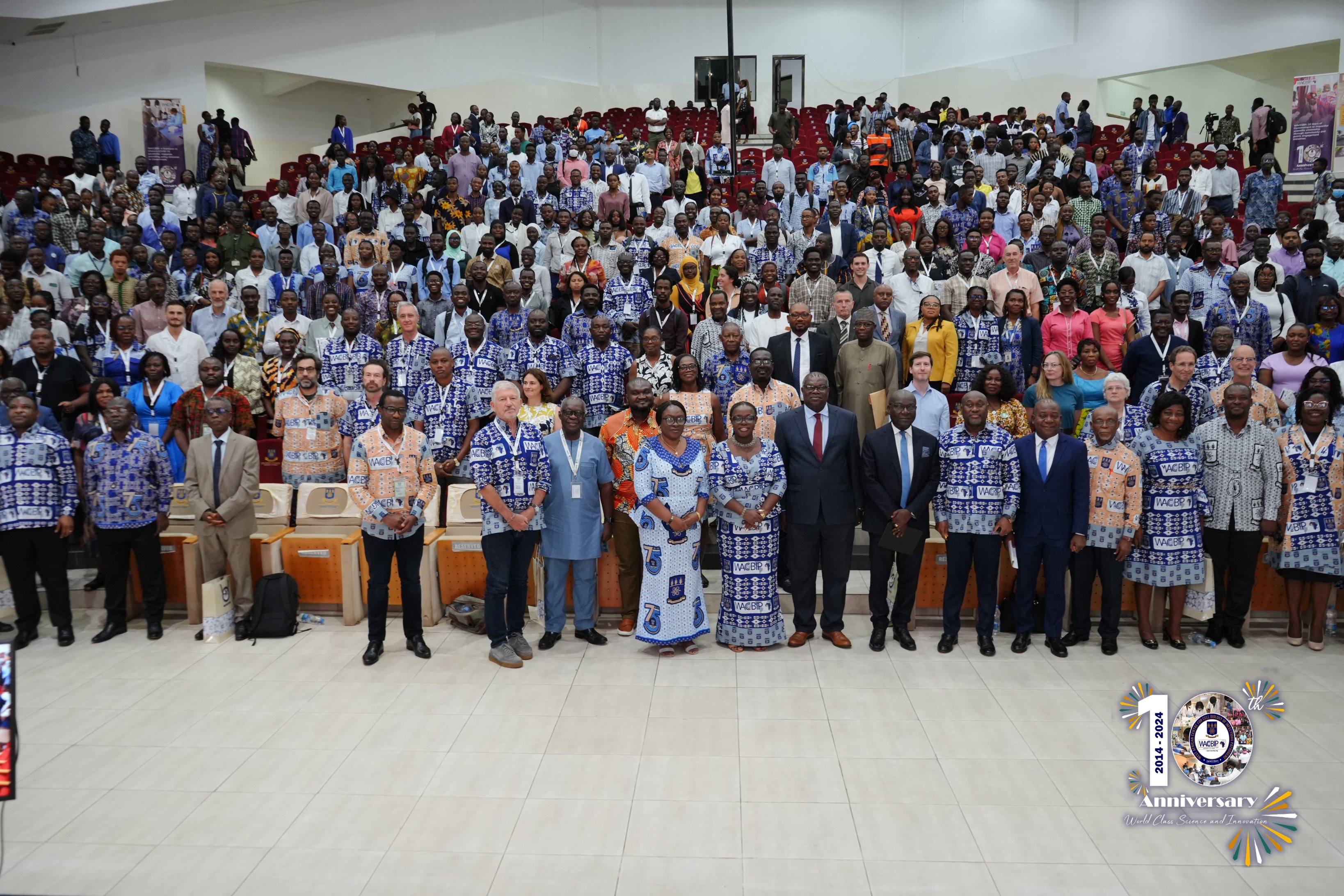
When the West African Centre for Cell Biology of Infectious Pathogens (WACCBIP) cut its tenth-anniversary cake in July 2024, the moment represented far more than celebration. It marked a milestone on Africa’s journey toward scientific self-reliance. Over the past decade, WACCBIP has quietly yet powerfully embodied what great institutions do best: training generations of African researchers, transforming global partnerships into local strength, and turning cutting-edge molecular science into public health solutions that countries across the continent can truly own. Its legacy extends beyond publications and conferences. It lies in the thriving network of scientists who can now detect, investigate, and respond to Africa’s most pressing health threats.

The anniversary, held alongside the 8th WACCBIP Research Conference (WRC2024) from July 29 to August 2, 2024, was not just a look back but a bold statement of progress. Under the theme “Addressing Health Challenges in Africa: A Decade of Building World-Class and Innovative Scientific Capacity,” the Centre showcased how sustained investment in people and partnerships has transformed once-isolated laboratories into vibrant hubs of genomic surveillance, antimicrobial resistance research, and vaccine innovation anchoring Africa’s growing capacity to shape its own health destiny.
One especially compelling thread running through its anniversary program was WACCBIP’s deliberate pivot from training for technique toward impact training. This was concretely exemplified in its recent workshops, such as the intensive var coding course that equips scientists to genetically fingerprint Plasmodium falciparum variants and advanced AMR and bacterial genomics labs. These courses don’t merely teach methods; they create a cadre of researchers who can run genomic surveillance pipelines in the country, interpret data for public-health decisions, and mentor the next cohort. In short: capability multiplies.
This effect was multiplied by partnerships. The Centre used its anniversary moment to foreground collaborations with international and regional players, including a high-profile forum on vaccine research and development with GIZ. These strategic partnerships and forums convene funders, manufacturers, policymakers, and researchers at one point to discuss the practical steps—financing mechanisms, regulatory pathways, and technology transfer—needed for African vaccine development to move beyond mere aspiration to successful delivery. This integration of science, policy, and industry signifies WACCBIP’s maturation from a capacity-building node into a convening engine for translational science.

For many an anniversary attendee, the most resonant message came from the legion of scientists themselves: investment in local research is non-negotiable. During the conference sessions, WACCBIP-affiliated researchers urged African governments to make long-term, predictable investments in domestic science—arguing that only sustained local funding could protect research agendas from shifting external priorities and ensure that innovations respond to African needs. That plea framed WACCBIP’s work as part of a larger movement toward scientific sovereignty: training is necessary, but without institutional and governmental support, gains are fragile.
WACCBIP’s decade illustrates the multiplier effect that well-focused ACE investments can have across higher education and health systems. By building local laboratory and bioinformatics capacity, creating career pathways for African researchers, and actively linking science to policy and industry, WACCBIP, together with other World Bank ACE Impact centres of excellence, demonstrates how ACE support translates into measurable systems change—stronger national surveillance.

A clear lesson from WACCBIP’s ten years was its deliberate sequencing: start with people, equip them with cutting-edge skills, embed them in partnerships that demand applied outputs, and then push for the domestic policy and funding ecosystems that will sustain the work. The Centre’s trajectory training workshops, genomic surveillance initiatives, vaccine R&D forums, and public calls for local funding—reads as a blueprint for ACE institutions aiming for long-term impact.
As the ACE program also marks its own tenth year, WACCBIP’s story is both a mirror of what has been achieved and a map of what remains: it reflects what strategic investment in human and institutional capacity can achieve, and it maps the next steps policy advocacy, sustainable financing, and industry linkages that will turn capacity into resilient health systems. In the words that echoed through the anniversary venue halls: Africa’s future health security must be homegrown, and centers of excellence like WACCBIP keep showing how to build it one trained scientist, one partnership, and one bold policy shift at a time.